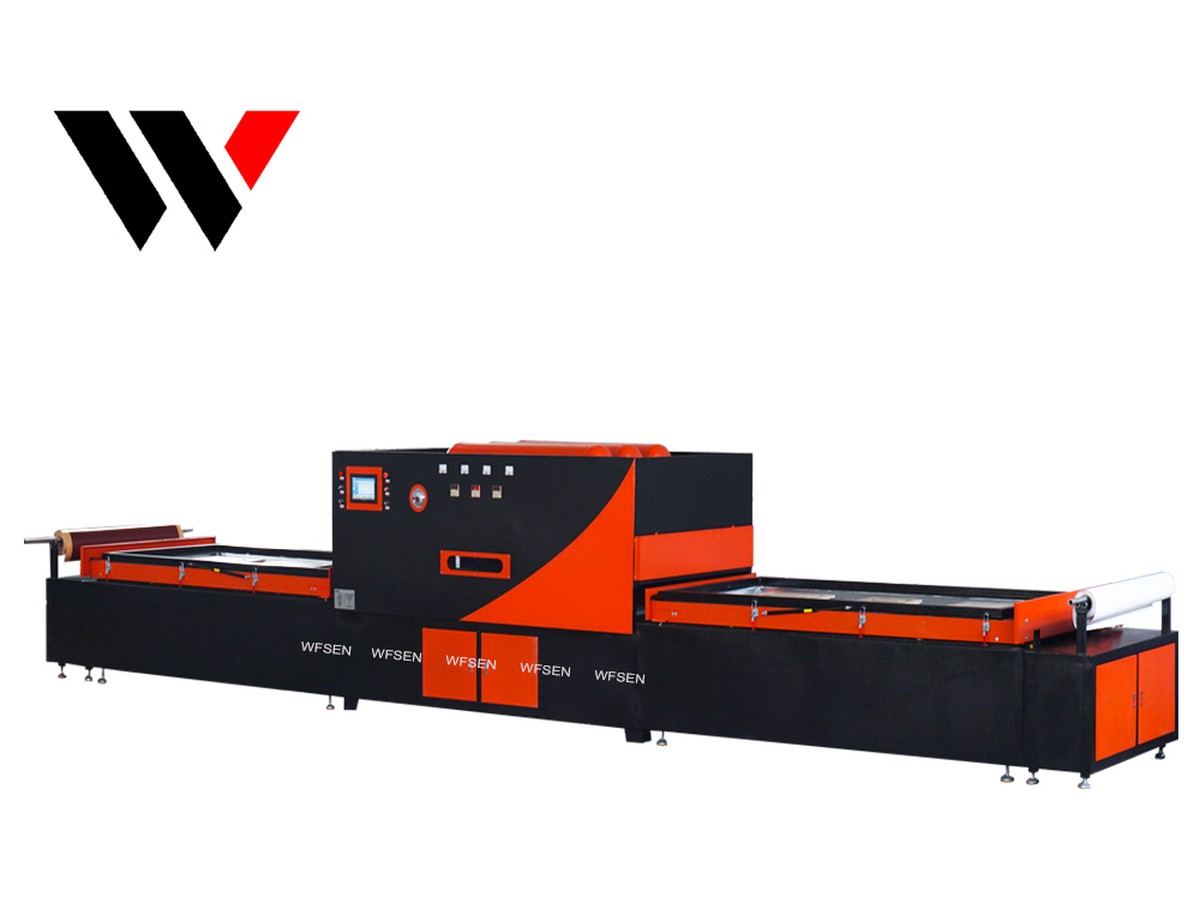
A vacuum membrane press exists for one job that no flat platen press can do: it pulls a flexible film down over a shaped surface and holds it there while the adhesive sets. A flat press can bond two flat faces. It cannot wrap a film around a raised panel, into a groove or around a curve, because it has nothing to push the film into those shapes.
That single difference decides who buys a vacuum membrane press and who does not. If every face you laminate is flat, a hot press is the simpler and cheaper machine. If your product has a profile — a kitchen door with a raised centre panel, a door skin with moulded edges, a shaped furniture part — the film has to be formed, not merely pressed, and this is the machine that does it.
This guide covers the whole vacuum membrane press range decision: how the cycle works, how to size the worktable against the door you actually sell, how to read a specification sheet that quotes two different power figures, and the lamination defects that trace back to the machine rather than to the film.
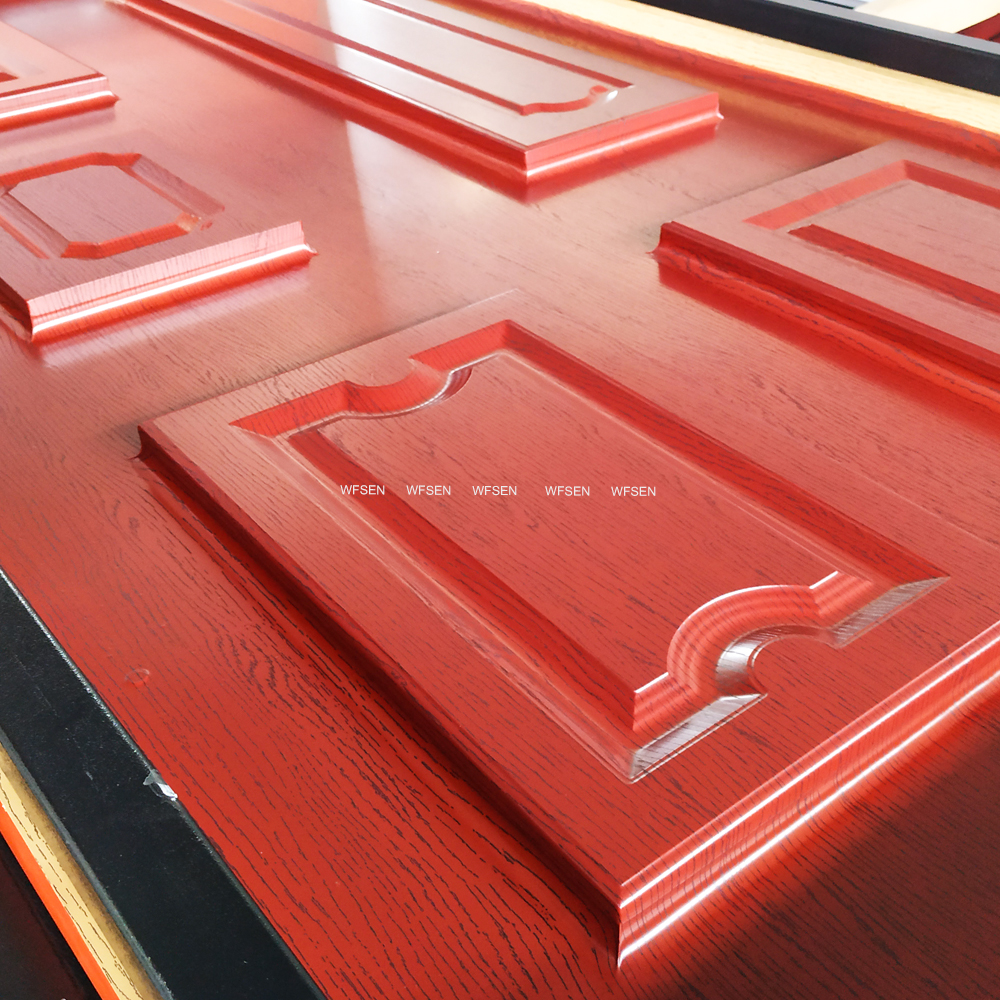
A membrane press works on a shaped surface the way a vacuum former works on a plastic sheet. A flexible membrane is stretched over the loaded table, the air underneath is drawn out, and atmospheric pressure — roughly 0.1 MPa, or about one tonne per square metre — pushes the membrane, the film and the adhesive down onto every contour at once.
Two consequences follow, and both matter commercially:
That is also why the machine is long. A membrane press needs a loading table, the press chamber and an unloading table in line, because the panel has to be positioned cold, drawn in, heated, cooled and released without being moved by hand while the film is still soft.
The sequence is short, but every step has a parameter that has to come from somewhere, and in most workshops three of them come from the film and adhesive supplier rather than from the machine builder.
The reason this matters when you compare machines is that the same six steps appear in every quotation. What differs is how tightly each step is controlled — which is what the PLC, the frequency control and the memory settings on the specification sheet are actually paying for.
The two names are used interchangeably in sales material, but they describe different things and the distinction tells you what the machine can do.
Vacuum forming shapes a thermoplastic sheet on its own. The sheet becomes the finished surface, and there is no separate substrate being bonded — a plastic tray or a formed liner is a vacuum forming job.
Membrane pressing bonds a film to a substrate that keeps its own shape. The MDF door is the product; the film is a decorative and protective skin bonded onto it. The membrane is the flexible tool that transfers atmospheric pressure evenly over the profile.
So a membrane press is the right term for door skins and furniture faces, and the machine is specified by its table and its vacuum, not by a draw depth. If a supplier quotes you a "draw depth" for a door skin job, ask what the worktable size and work height are — those are the numbers that will limit the door.
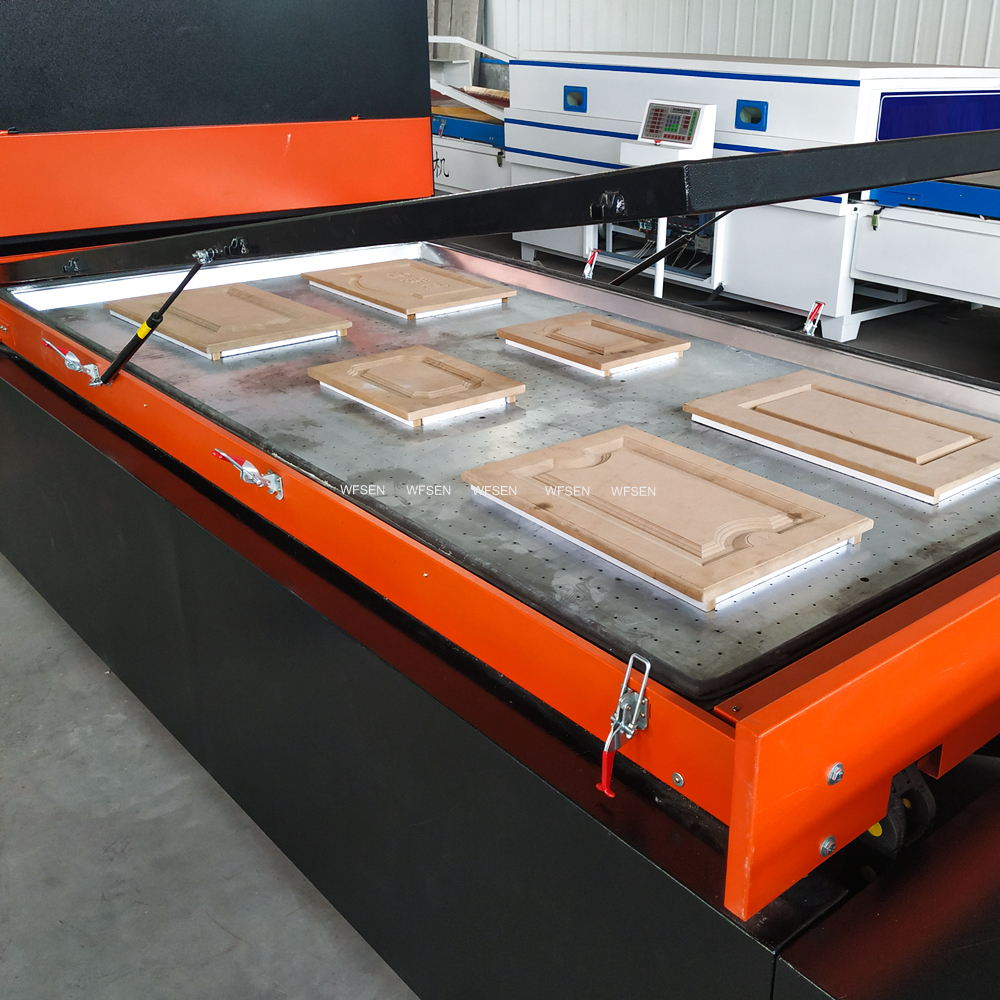
The worktable is the hard limit, and it is worth sizing from the largest single piece rather than from the average one. A 2500 × 1300 mm table like the VM140-2 will take a full-size door with room to spare, or several smaller components laid side by side in the same cycle — which is the more common way to run it.
Three questions fix the size:
Then check the floor. A machine that presses a full door is around ten metres long overall because of the in-line loading and unloading tables, and it is the length, not the width, that usually decides the layout of a door workshop.
A membrane press specification sheet quotes two power figures, and buyers routinely confuse them. Both are real, and they answer different questions.
Total power is the connected load — what the machine draws if every heater, the pumps, the motors and the controls run at once. It is the number you give your electrician, because it sizes the supply cable and the breaker. On the VM140-2 this is 40 kW.
Actual power is what the machine consumes in running, because the heaters cycle rather than run continuously once the platens and the chamber are up to temperature. This is the number that shows up on your electricity bill and in the running cost per door — 7 kW on the same machine, with three vacuum pumps and a preheating system.
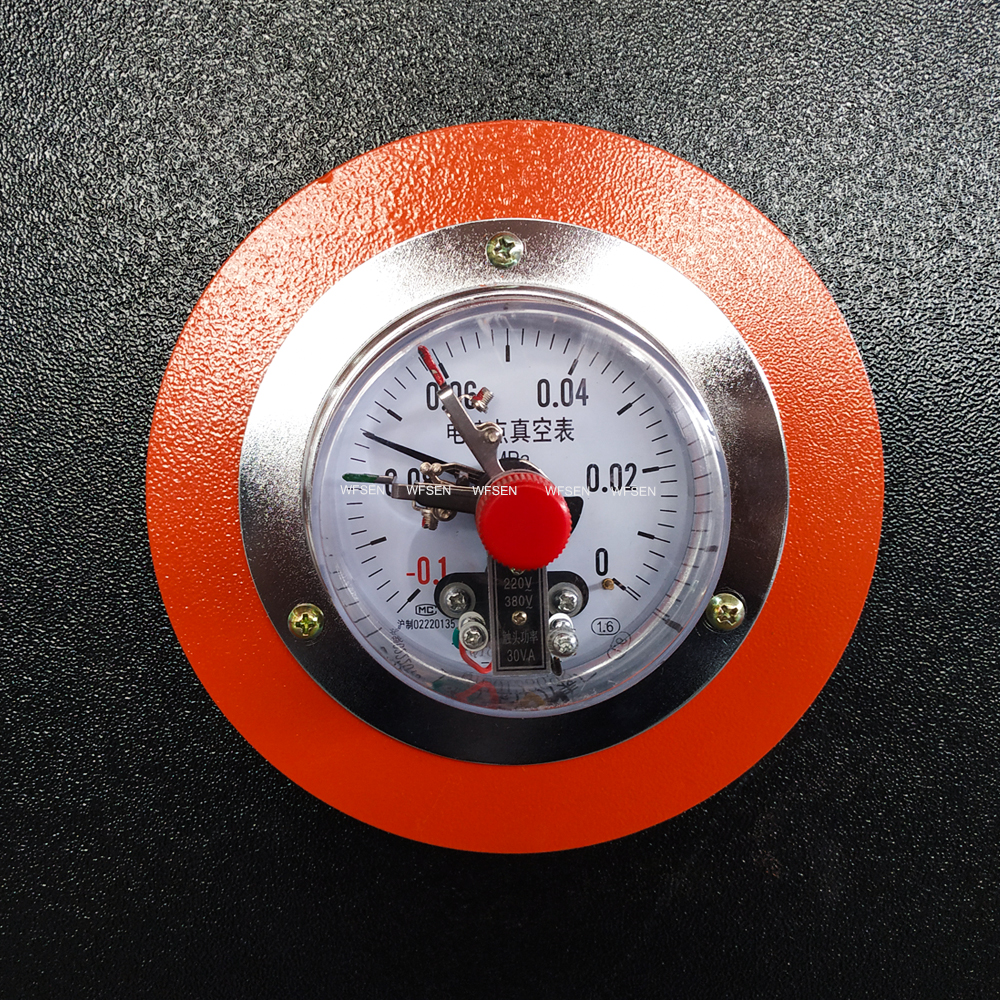
The other two numbers to read carefully are the vacuum pump figure and the rated work pressure. The pump is quoted by the vacuum it can reach — 140 kPa on the VM140-2 — and the rated work pressure is what the chamber actually holds during the cycle, 0.1 MPa below atmosphere. A machine that reaches a deep vacuum quickly but cannot hold it while the film is hot will produce a different result from one that holds pressure steadily, so ask for both figures rather than the pump rating alone.
Finally, look at the control specification. PLC control with frequency control and a touch screen is what lets you store and repeat a cycle instead of watching a pressure gauge; the VM140-2 stores nine different settings with one-touch recall, which in practice means one setting per door type rather than a setting per operator.
The running cost of a membrane press is driven by consumables, and it is worth costing them before you buy the machine because they decide whether a job is profitable at the price your market pays.
So the machine comparison cannot stop at the purchase price. A press that holds vacuum steadily and heats evenly uses less film scrap and fewer membrane replacements than one that does not, and those savings recur every shift.
These two machines are often quoted against each other, and the choice is decided by whether the surface you are bonding is flat or shaped.
A six-layer hot press bonds flat faces under heat and pressure from platens, and it does it to several assemblies at once — a maximum temperature of 180 °C reached through a thermal oil furnace, which is a process a membrane press does not attempt. It is the machine for laminating flat boards, for veneering and for bonding decorative paper onto a flat panel, at high output per hour.
A membrane press is the machine for a three-dimensional face. If your product range includes moulded doors, curved components or profiles, it is the only one of the two that can finish them; if it does not, you are paying for a capability you will not use.
Door factories commonly run both: flat skins and substrates pressed in quantity on a hot press, and the moulded door faces finished on the membrane press. Where the two stages sit next to each other on the line is covered in our guide to the plywood pressing line.
Almost every complaint about a membrane press is one of five symptoms. Each one points at a different part of the cycle, which is what makes them worth learning in order.
1. The film will not follow a sharp internal corner. The film is not hot enough at the moment the vacuum is applied, or the profile radius is tighter than the film can form. Check the preheat and look at the film supplier's minimum forming radius before blaming the machine.
2. Creases or folds in the film at a corner. Excess film is being drawn into a small area. Nesting, the direction the film is laid and the amount of stretch left in the film all affect this — a fresh roll behaves differently from a part-used one.
3. Blisters or bubbles under the film. Air or moisture is being released from the substrate faster than the vacuum can remove it. Check the substrate moisture content and how the chamber is drawn down.
4. The bond holds at the edges but releases in the centre of a flat area. The adhesive is not being activated evenly across the panel. This is a heating or dwell question, not a vacuum question, and it is the defect most often misdiagnosed as a pump problem.
5. A repeating mark or crease in the same place on every panel. The membrane is worn or creased at that point, or a jig is standing proud of the worktable. A repeating defect is almost always tooling rather than process — replace the membrane and inspect the table.
The figures below are the published specification of the VM140-2 vacuum membrane press machine, which is the model in the WFSEN range built around a full-size door with in-line loading and unloading tables.
| Model | VM140-2 | Worktable size | 2500 × 1300 mm |
| Total power | 40 kW | Actual power | 7 kW |
| Max. work height | 60 mm | Vacuum pump | 140 kPa |
| Rated work pressure | ≥ −0.1 MPa | Control system | PLC |
| Overall size | 10000 × 1800 × 1700 mm | Weight | 3000 kg |
The build carries PLC and frequency control with a touch screen, three vacuum pumps, a preheating system, an aluminium heating plate with stainless heating tubes, and nine stored settings with one-touch recall. The pump chamber is on the loading side so the operator can see the gauge from the load position, and the mechanical and electrical components are from German Siemens, SK LS and DELIXI.
Can a vacuum membrane press laminate flat panels too?
Yes. A flat panel laminates perfectly well, because atmospheric pressure presses evenly across the whole surface. What it cannot do is apply the higher pressure a platen press uses for veneering or for bonding a thick face, so flat production in volume is usually better placed on a hot press.
What vacuum do I need for a door skin?
Enough to hold a steady, deep vacuum for the full dwell, not merely to reach a peak reading at the start. Look at the rated work pressure on the specification sheet rather than the maximum the pump can pull, and ask for both figures.
How long does one cycle take?
The cycle is fixed by your adhesive and film, not by the machine: preheat, draw-down, dwell and cool. Because the dwell is decided by the adhesive supplier's data sheet, that is the parameter to bring to the quotation conversation rather than a figure to accept from a catalogue.
Do I need a generator for a 40 kW machine?
Total power is the connected load and it is what your supply must be able to deliver — but actual running consumption is much lower because the heaters cycle. Have your electrician size the supply from the total figure and the cable run, and check the running cost from the actual figure.
How often does the membrane need replacing?
On condition rather than on a schedule. The signal is a repeating crease or mark in the same place on every panel, which means the membrane is worn at that point. It is a consumable, and its life depends on the film temperature and the sharpness of the profiles you run.
WFSEN has been building woodworking machinery in Qingdao since 2008, on a 16,000 m² site, and the vacuum membrane press in the range is built around the components a door factory actually runs: a full-size worktable, in-line loading and unloading, and enough stored settings that a shift change does not mean a lost setup. The same plant builds the cold press and hot press that sit either side of it in a panel line.
Send us the figures that decide the machine — the largest component you laminate in both directions, its build height including the film and any jig, how many pieces you want per cycle, and the film and adhesive system you intend to use — and we will come back with a worktable size and a layout rather than a catalogue page. Contact our engineers to start.