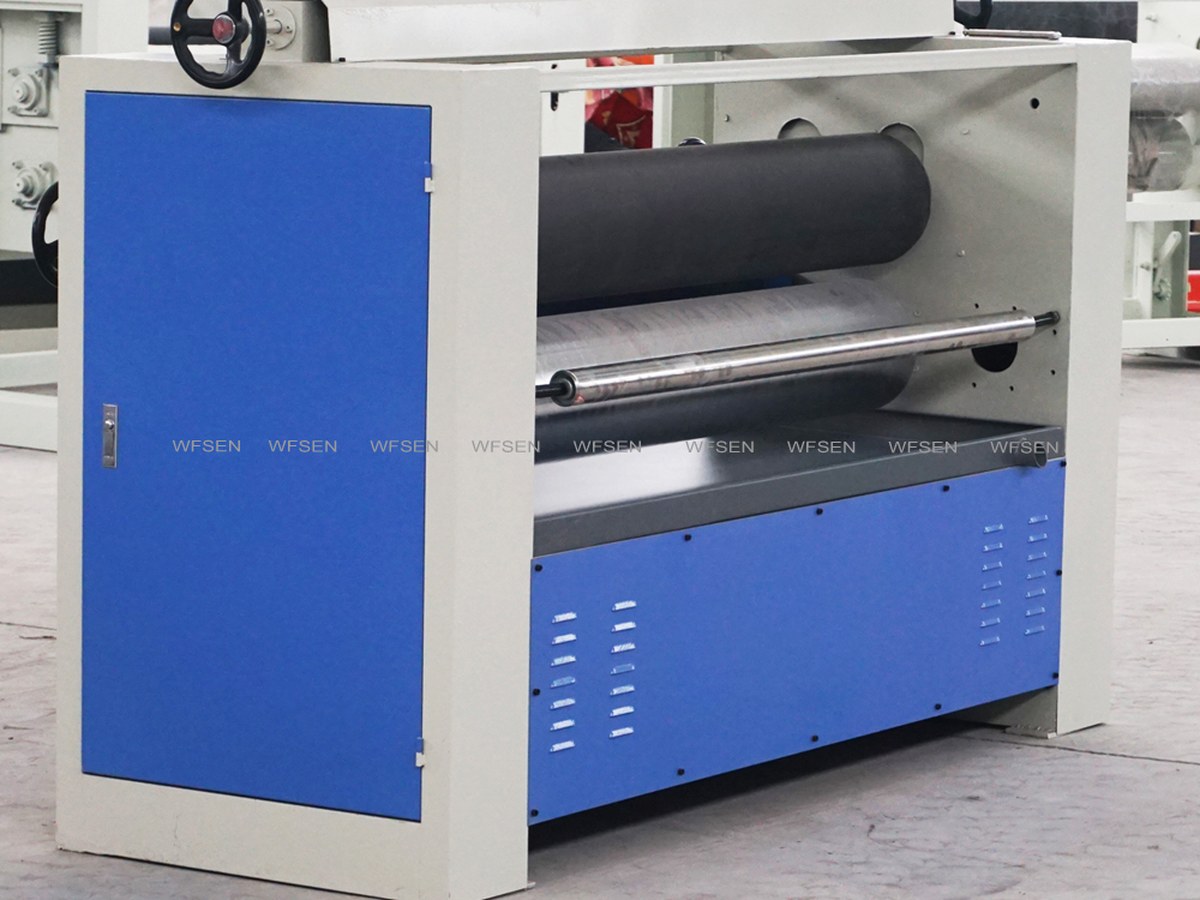
A glue spreader is the quietest machine in a plywood line and the one that decides the most. It runs at the front of the pressing stage, it costs a fraction of a press, and it is where the bond is either set up to succeed or set up to fail. Nobody notices a well-set spreader; everybody notices the panels that come out of the press with a dry patch in the middle.
This guide covers the settings that actually change the result, how the spreader is matched to the press behind it, and the maintenance that keeps the film even from the first panel of the shift to the last.
A press applies pressure across the whole panel. If the adhesive is uneven, that pressure simply squeezes the wet areas and leaves the dry areas starved — and the fault does not appear until the panel is sanded, or until it reaches a customer's workshop and splits along a glue line. Tonnage cannot repair a film problem, which is why the spreader belongs in the same sizing conversation as the press.
It is also the first machine in the plywood pressing line that touches the assembly, so a mistake made here is carried through everything downstream.
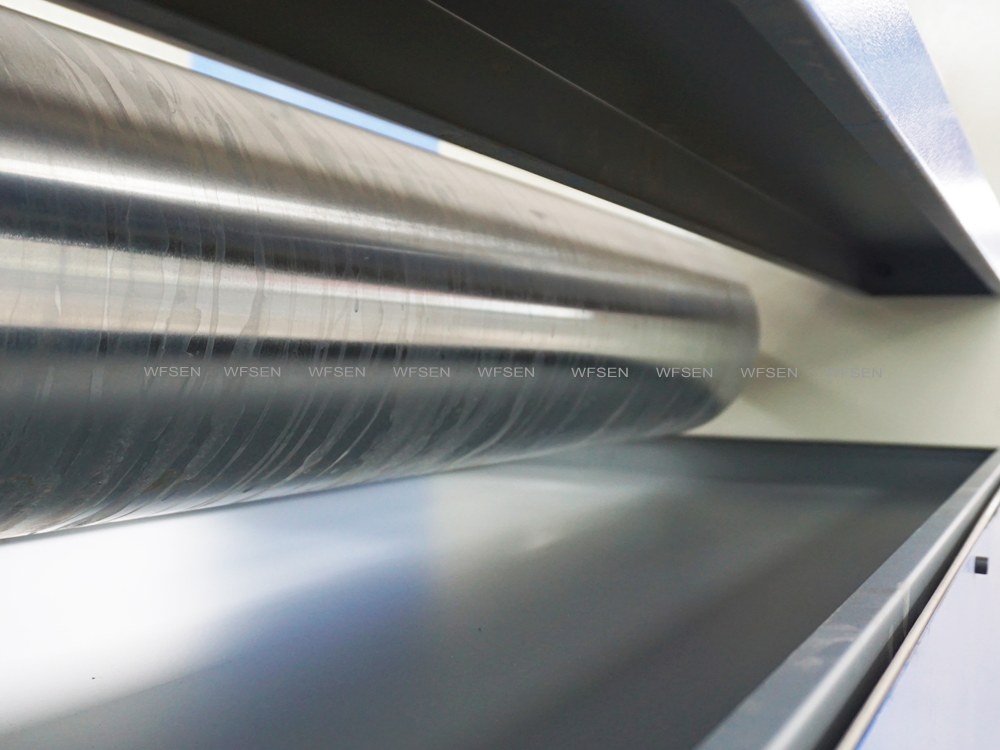
Every spreader in the WFSEN range is set the same way, and only the first two change the film:
The film weight you are aiming for is not a machine number. It comes from your adhesive supplier's data sheet, because your adhesive, your substrate and the bond you are building each shift it. The spreader provides the adjustment; the roller gap is how you translate the supplier's figure into a machine setting, and a scrap board is how you verify it.
The range is built in two versions and the choice follows the assembly, not the budget. The MT6213 double surface glue spreader coats both faces in one pass, which is what a plywood build-up needs when both sides of a core are being bonded at once. The MT6113 does the same job with a single coating roller, and suits one-sided work.
Both are specified on the same 1300 mm maximum glue spreading width and the same 215 mm rubber roller diameter, with a 20 m/min spreading speed on a 2.2 kW motor. The difference between them shows up on the scale: 700 kg for the single surface build and 800 kg for the double surface build, on the same 2100 × 900 × 1300 mm frame.
Two numbers on the spreader specification have to line up with the press behind it.
Working width. The 1300 mm spreading width has to cover the widest panel that goes into the press. A press with a wider platen than the spreader can service is wasting capacity on every cycle, because the panels that need the extra width cannot be glued.
Working thickness. The 60 mm maximum working thickness sets the thickest assembly the spreader will pass. Build-ups with solid timber cores, or door blanks with a deep build, run into this limit before they run into the press.
The same logic applies at the press end: a cold press machine with a 3000 × 1300 mm platen needs a spreader that can feed it at the cycle rate the press is capable of, or the press will stand open waiting for assemblies.
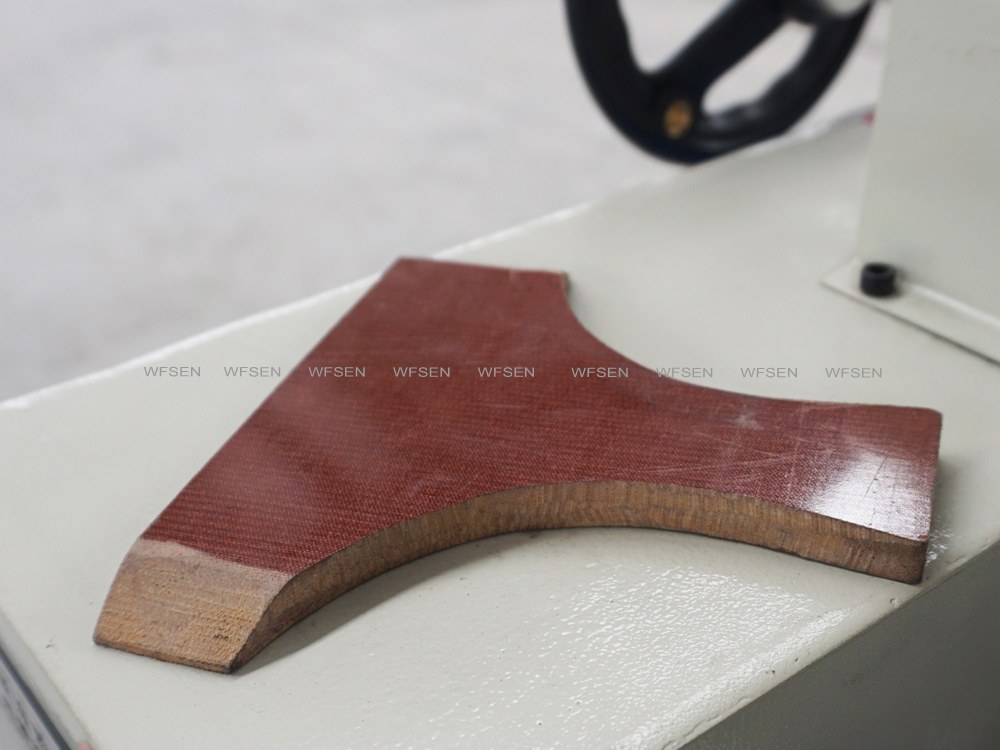
The rubber roller is a wear part, and it wears unevenly because the panel does not load it evenly. A roller that has flattened or hardened in the middle will deliver a heavier film at the edges and a thinner film in the centre of every panel, and the operator compensates by opening the gap — which makes the edges worse.
Check it the same way you check the film: run a scrap panel, look at the surface, and measure. If the roller surface has gone glossy, hard or visibly dished, replace it. The doctor blade gets the same treatment — a nick in the blade edge prints a stripe down the panel that no gap adjustment will remove.
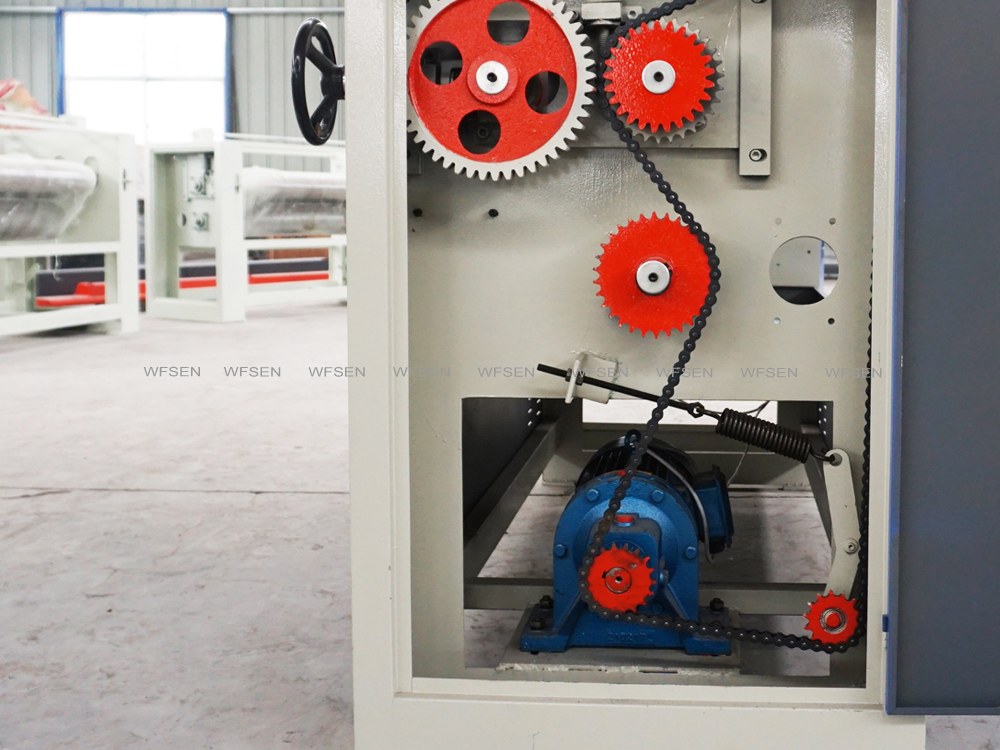
On the drive side of the machine, the roller drive runs through a chain and sprocket set with a tension spring and a geared motor. Chain tension is the item that decides whether the rollers turn at the speed the dial says: a slack chain lets the roller lag on a heavy panel, which shows up as a light patch at the start of the board and a heavy one at the end.
Film problems announce themselves in a predictable order. Checking in this sequence takes a few minutes and saves a shift of panels.
| Model | MT6113 single surface | MT6213 double surface |
| Max. glue spreading | 1300 mm | 1300 mm |
| Max. working thickness | 60 mm | 60 mm |
| Rubber roller diameter | 215 mm | 215 mm |
| Glue spreading speed | 20 m/min | 20 m/min |
| Motor power | 2.2 kW | 2.2 kW |
| Overall dimensions | 2100 × 900 × 1300 mm | 2100 × 900 × 1300 mm |
| Weight | 700 kg | 800 kg |
The full glue spreader machine range is built on these two builds, and both are made in the same plant as the presses they feed, which is why the working width and the platen size can be matched at the quotation stage rather than discovered at installation.
How do I know the roller gap is right?
Run a scrap panel of the same material and thickness and look at the film before the press. If the adhesive is even across the width and full length of the board, and the bond behaves as your adhesive supplier describes, the gap is right for that panel. Write the setting down — that is your starting point next time.
Can the same spreader handle a thin veneer face and a thick core build?
The machine's limit is the 60 mm maximum working thickness, and the roller gap is adjusted for each job. Thin and thick assemblies are set differently, so expect to reset between them rather than to find one setting that covers both.
How often should the rubber roller be replaced?
By condition, not by calendar. A roller that has gone glossy, hardened or dished across the middle will not deliver an even film whatever the gap says. Check it whenever you check the film.
Does the spreader have to match my press width exactly?
It has to be able to cover it. A spreader that is narrower than the platen limits every panel size the press can take, which is the most expensive kind of mismatch because the press is already paid for.
A spreader is quoted from these figures: the widest panel you run, the thickest build-up, the adhesive and whether both faces are coated. Send those and our engineers will confirm the build — single or double surface — and how it lines up with the cold press or hot press behind it. If the line also includes assembly and curing, the sizing order is set out in our guide to the plywood pressing line.
WFSEN has built woodworking machinery in Qingdao since 2008 on a 16,000 m² site, and the spreaders, presses and lines are specified together by the same engineering team. Contact us with your panel and build-up, and we will tell you which build fits before you order.
If you are still working out where the spreader sits in the sequence, start with the cold press selection guide and work backwards to the glue.