A plywood pressing line is not one machine. It is a sequence — glue applied evenly, a press that holds the stack flat for the full cure, and a place to stack the panels afterwards while the bond develops. Get the sequence and the sizing right and the line runs quietly for years. Get either wrong and the failures show up weeks later, at the customer, as a raised edge or a delaminated face.
This guide covers the pressing stage as a stage: what each machine in it does, how the three units are sized against each other, and where a cold press stops and a hot press becomes necessary.
Panel preparation happens before the pressing stage and finishing happens after it. Veneer sheets are squared and clipped on a veneer clipper; the pressed panels are sanded and calibrated afterwards. The pressing stage itself sits in the middle, and it does one job: it holds a glued assembly flat, at a controlled pressure, for as long as the adhesive needs.
Two different jobs are performed here, and line planning goes wrong most often by confusing them:
In a full plywood production line the pressing stage sets the panel size that the rest of the line can run, because the platen is the hard limit on what fits. That is why it is worth sizing this stage before the machines around it.
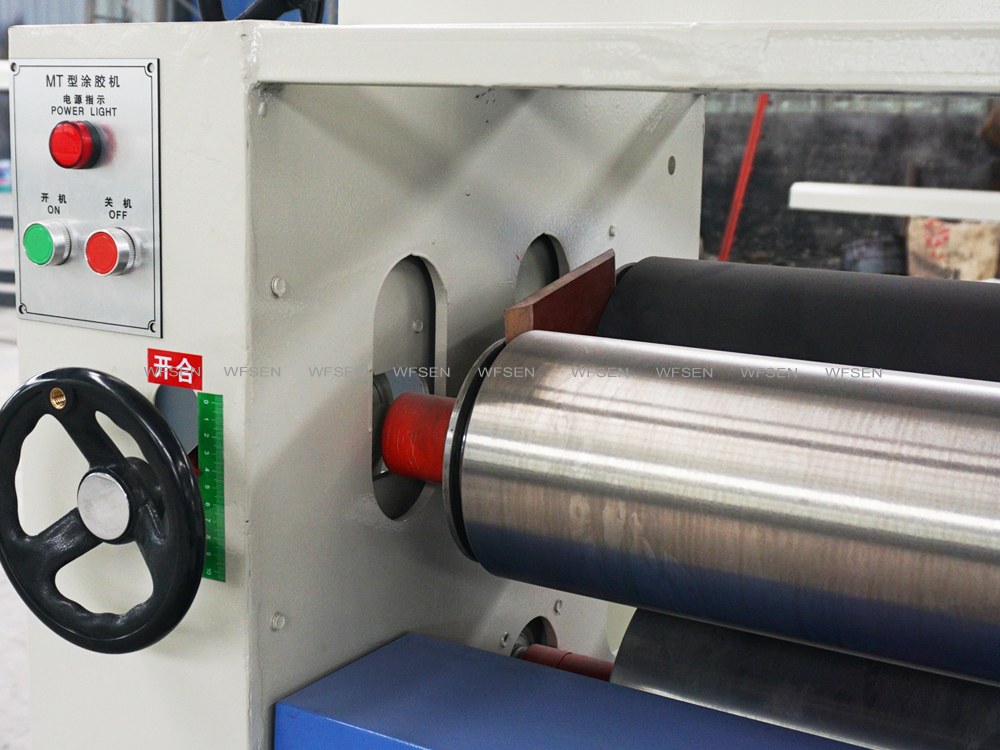
A press can only work with the glue film it is given. If the film is uneven, the press will close on a high spot and leave a starving joint somewhere else, and no amount of extra tonnage can correct it. That makes the glue spreader a sizing decision, not an accessory.
The MT6213 double surface glue spreader is specified for a maximum glue spreading width of 1300 mm and a maximum working thickness of 60 mm, with 215 mm rubber rollers and a spreading speed of 20 m/min on a 2.2 kW motor. Single-surface work is handled by the MT6113, the same machine with one coating roller. The whole glue spreader machine range shares the roller geometry, weighing 700 kg for the single-surface build and 800 kg for the double-surface build, on a 2100 × 900 × 1300 mm frame.
Set the roller gap for the adhesive you actually buy, then verify the film on a scrap panel — not on the first production panel. A spreader that is set once and never checked is the origin of most of the bond failures listed further down. The adjustments themselves are covered in our glue spreader settings guide.
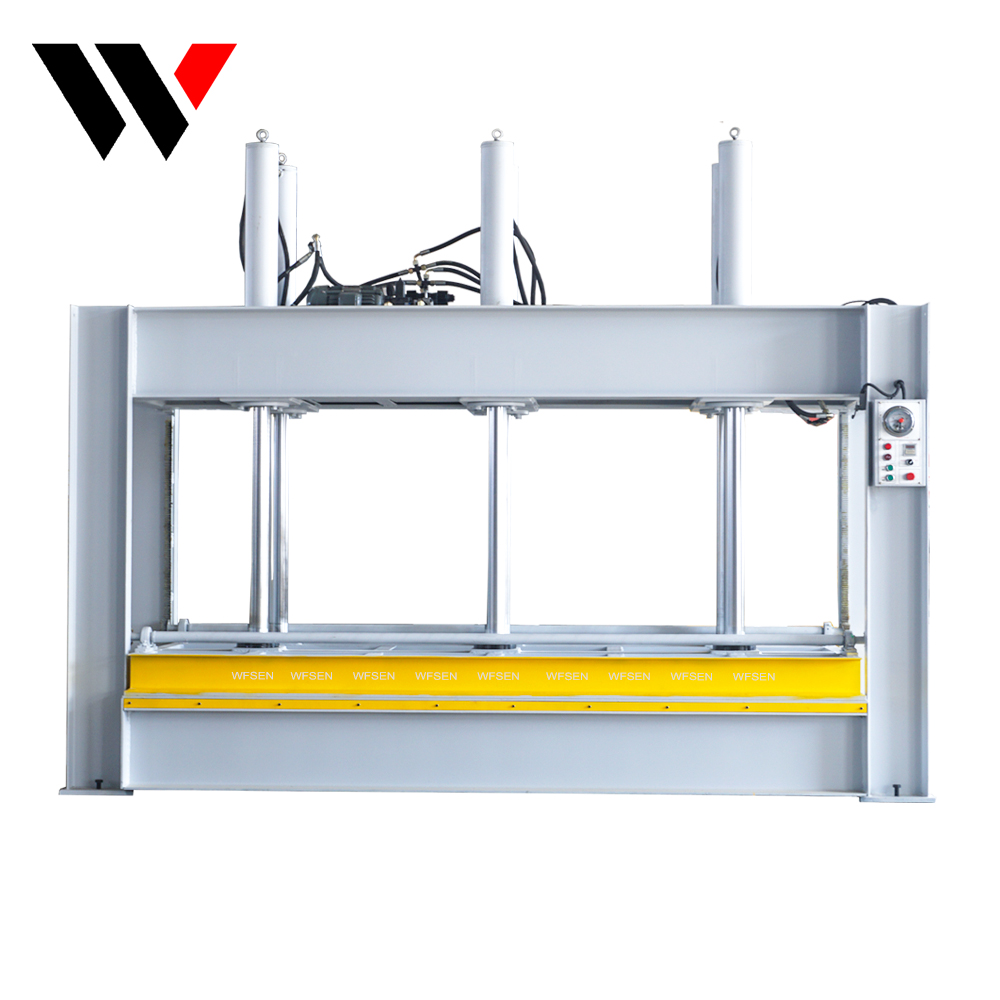
In the pressing stage the cold press is the assembly unit. It applies pressure and holds it while a cold-curing adhesive reacts at room temperature — there is no heating platen and no thermal oil circuit on this machine at all. The selection detail is covered in our guide to choosing a cold press machine; what matters at line level is how the press interacts with its neighbours.
Across the cold press machine range the pressure steps run 50 ton, 100 ton and 120 ton, on platens from 1250 × 1000 mm to 3050 × 1300 mm, with a platen opening of 900–1000 mm and a 4 kW hydraulic unit. A 50 ton press on a 3000 × 1300 mm platen weighs 1900 kg; the roller-feed 100 ton model on 3050 × 1300 mm weighs 3500 kg; the MC120T closes at 200 mm/min on a 2500 × 1250 mm platen.
The number of daylights is what connects the press to the spreader. A three-stage build presses three 1250 × 1000 mm stacks in one cycle on one hydraulic unit, so the spreader has to be able to feed three assemblies in the time the press is closed. If it cannot, the extra daylight earns nothing.
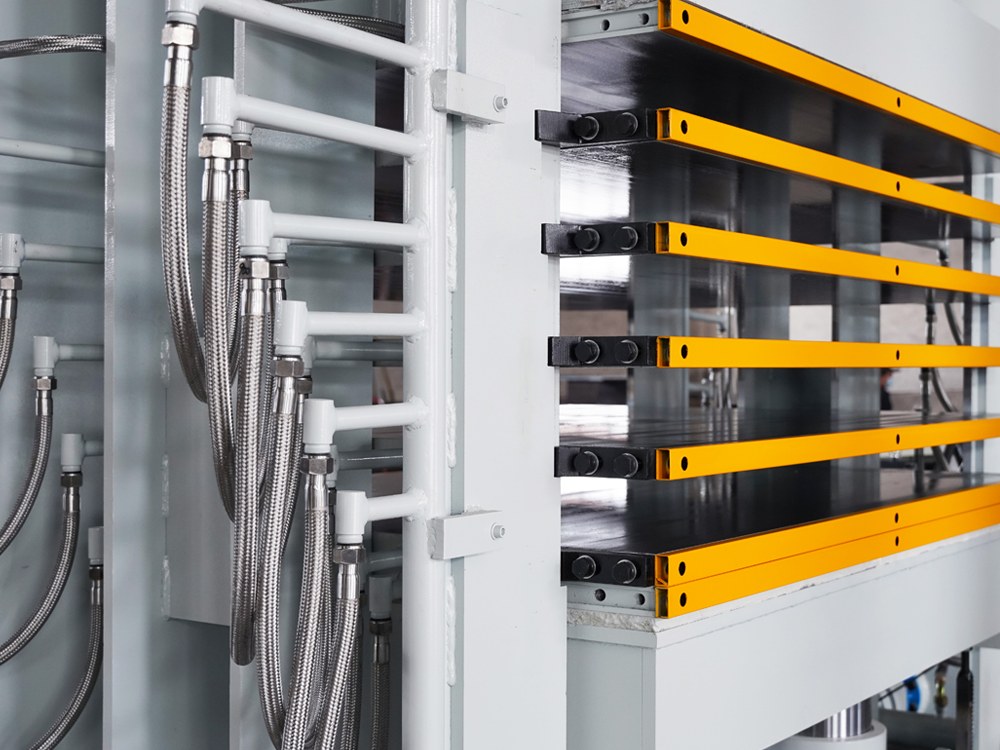
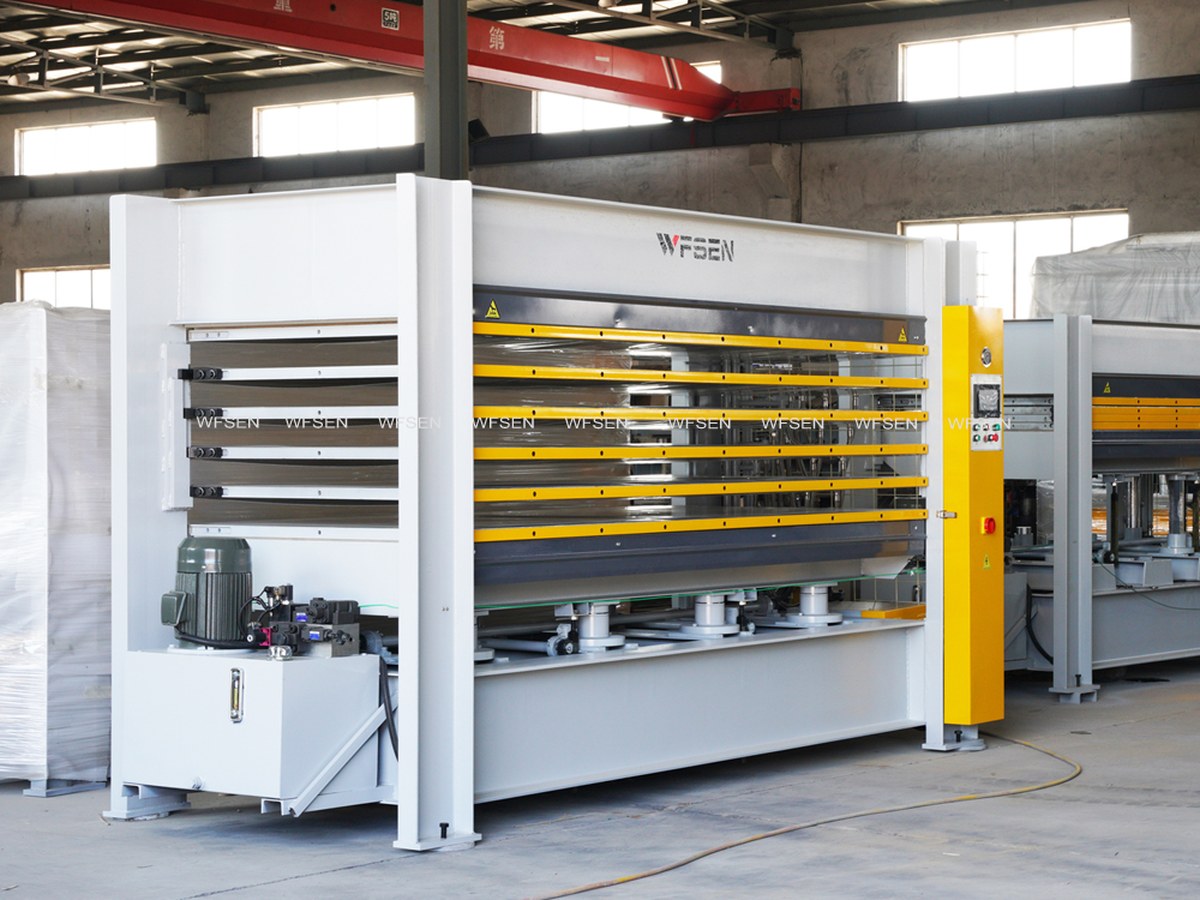
The boundary between cold and hot pressing is the adhesive and the face material, never the panel size. If the process needs heat to cure or to bond a decorative face, the press must be heated, and extra tonnage on a cold press will not substitute for it. In the hot press machine range the platens are heated by a thermal oil circuit: the HT-160 five-layer press carries 8 × 100 mm cylinders on a 3300 × 1300 × 42 mm platen, with a 5.5 kW hydraulic motor, a 3.7 kW hot oil pump and a 98 kW thermal oil furnace.
The clearest illustration of the difference is on the specification sheet of the HT-300 six-layer hot press: a maximum temperature of 180 °C, reached through a 63 kW thermal oil furnace with a 2.2 kW hot oil pump, on six layers of 1600 × 1200 × 42 mm platens and 4 × ø200 mm cylinders. A cold press has no temperature figure to publish.
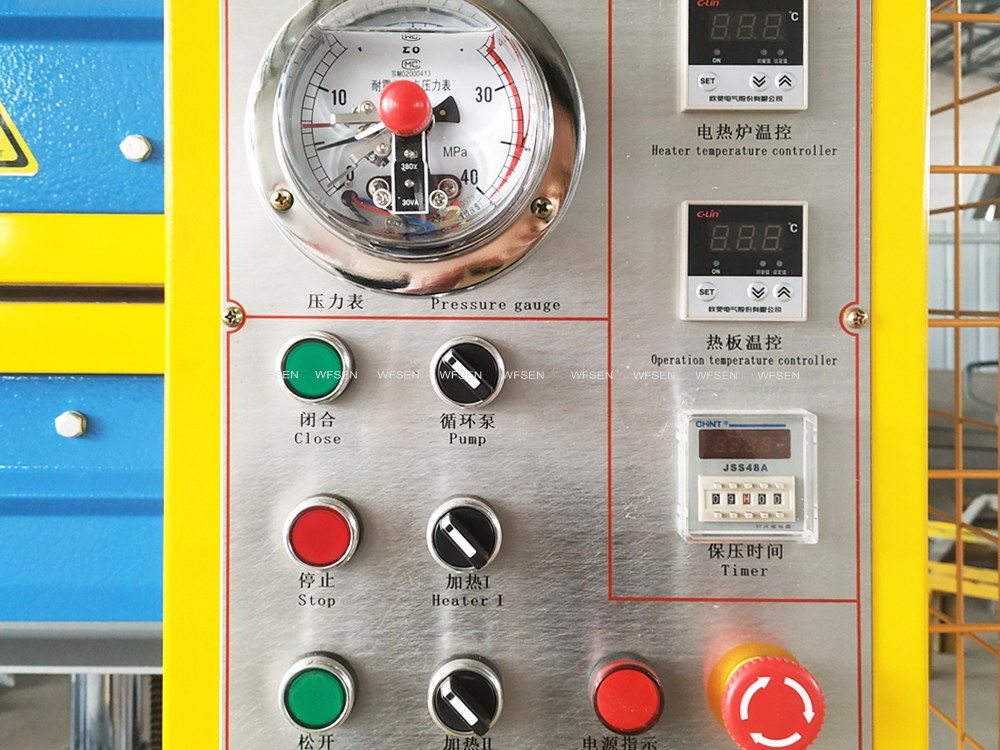
That difference is visible on the control panel of a heated press, which carries a pressure gauge alongside a heater temperature controller, a platen temperature controller and a pressure-holding timer. The equivalent panel on a cold press has a pressure gauge, up, down, stop and a delay timer — and nothing that reads in degrees. When you are planning a line, count the controllers: they tell you which machine you are actually specifying.
Sizing runs in one direction: from the board you sell, back to the press. The order is short enough to do on a page.
Multiply those four numbers and you have the shape of the stage. The reason to do it in this order is that the last step constrains the first: a line that can press 200 panels a day but has racking for 60 has a pressing stage sized at 60.
If the arithmetic tells you the press is the bottleneck, a bigger single press is not always the fix. Multi-daylight cold presses and five- or six-layer hot presses multiply cycle output on the same hydraulic unit and the same floor area, which is usually cheaper than moving to a larger platen.
The pressing stage has one utility the rest of the line does not: heat, on any machine that presses with a thermal oil circuit. The HT-160 five-layer press draws 98 kW of furnace power and the HT-300 six-layer press 63 kW, and both need a thermal oil circuit with its own pump. Plan that as a separate utility connection, not as an extension lead from the panel saw.
On the mechanical side the footprint is set by the platen plus loading clearance. The HT-160 five-layer press measures 4500 × 1700 × 2300 mm overall, the MT6213 glue spreader 2100 × 900 × 1300 mm, and the cold press range runs from a 3000 × 1300 × 2300 mm 50 ton unit up to 3600 × 1500 × 2200 mm on the roller-feed model. Cold press motors are available for 220 V, 380 V and 415 V supplies, which matters when you do not control the mains in the building.
Leave the access side clear. Caul plates, spacers and loading frames have to move in and out of the daylight opening on every cycle, and the operator standing there needs room to work without reaching over a conveyor.
1. Panels that are under-pressed in the middle. Usually a tonnage-to-platen mismatch: the pressure is correct for a small panel and spread too thin across a large one. Check the tonnage and platen size together, not separately.
2. A glue line that varies across the panel. The spreader, not the press. Roller gap, roller condition and feed speed — verify the film on a scrap board before the shift.
3. Blisters or bubbles on the face. Trapped moisture or air released faster than the bond can hold it, often with a pressure ramp that closes too quickly. Check the stock moisture and how the platens approach.
4. Face defects that follow the caul plate. A worn or dirty caul plate telegraphs through the face. Rotate and inspect the plates on a schedule rather than when a reject appears.
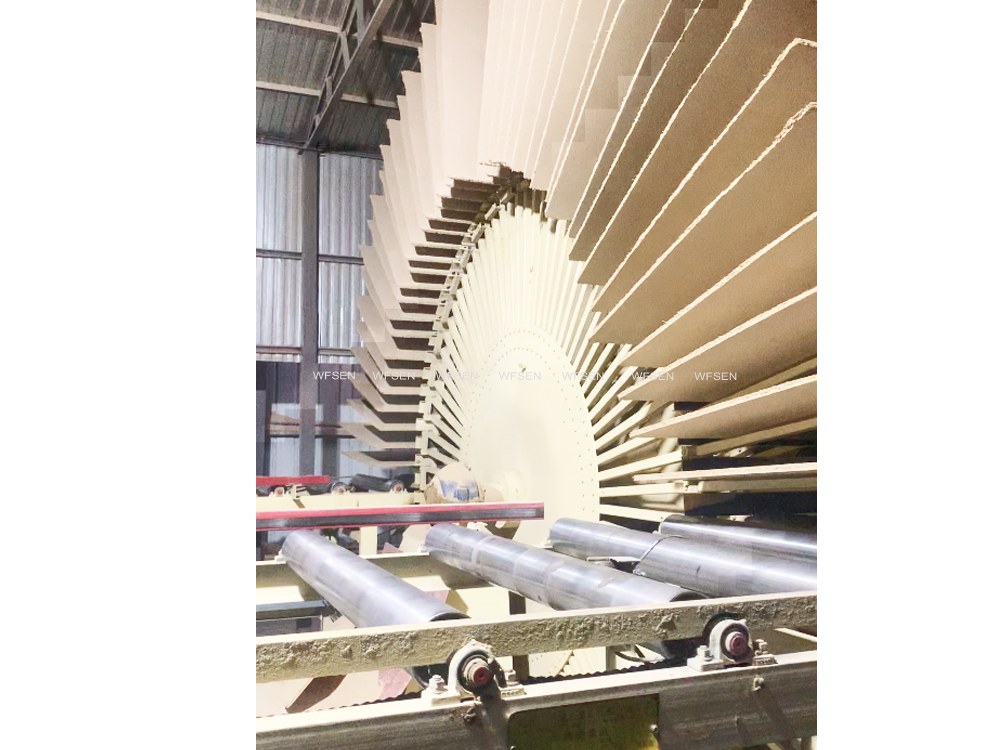
5. Delamination a week after delivery. The bond was released before it reached full strength, or the stack was not kept flat while it cured. This is the failure that traces back to the racking step rather than to the press.
Because the pressing stage is sized backwards from the board, a quotation that is worth anything needs six numbers from you:
With those six, our engineers lay out the sequence — spreader, press, racking — including the heating circuit where one is needed, and send a drawing before anything ships.
Can a cold press replace a hot press?
No. A cold press has no heating platens and no thermal oil circuit, so it cannot reach the temperatures a heat-curing adhesive or a laminating face needs. Where the process runs cold, a cold press is the cheaper machine to buy and to run; where it does not, the press has to be heated. The two machines sit on the same line rather than replacing each other.
What is the smallest configuration that makes sense for a new line?
One glue spreader, one cold press sized to your largest board, and racking for at least one shift of output. That configuration presses and cures without a heating circuit, so it is also the cheapest to install.
How many operators does the stage need?
Loading, pressing and stacking are usually two people per shift on a single-daylight line — one at the spreader and one at the press and rack. A multi-daylight press can keep the same two people busy at a higher output, provided the spreader keeps up.
Do you supply the line as a package or as separate machines?
Both. Most customers start from the pressing stage and add the machines around it as volume grows, which is why the sizing question above is worth answering before the first order.
WFSEN has been building woodworking machinery in Qingdao since 2008, on a 16,000 m² site, and the machines in this stage — glue spreader, cold press and hot press — are built in the same plant, so the heating circuit, the platen sizes and the daylights can be specified together instead of assembled from three suppliers.
Send the six numbers above and you will get a sequence and a layout, not a catalogue page. Contact our engineers to start.