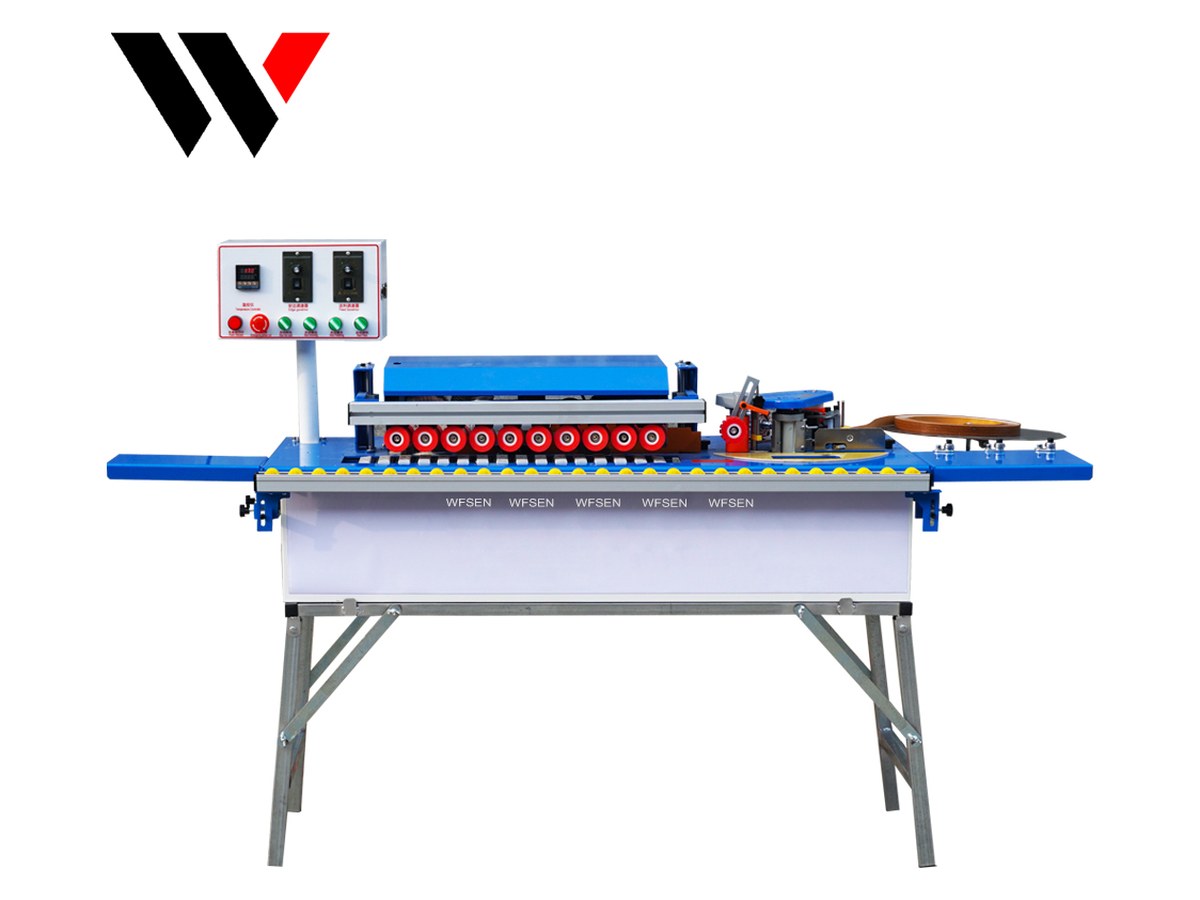
"Small edge banding machine" is a search that hides two completely different products. At one end there is a 15 kg unit that sits on a bench and takes almost no floor space. At the other there is an 80 kg compact straight-line machine that is genuinely a small version of a production bander, with driven cutting, scraping and polishing units.
Both get called "small". They are not interchangeable, and the difference decides what work you can take. This guide covers the two compact models we build — the MF160B mini edge banding machine and the MF202 compact edge bander — and how to tell which one your work needs.
A full-size automatic edge bander occupies several metres and weighs over a tonne, because it carries a chain feed, a pressure beam and a series of driven stations along one long bed. A small machine cannot do that, so it solves the problem in one of two ways:
The practical consequence is simple: the first type is limited by what you can physically present to it, and the second type is limited by the panel thickness it will accept. Everything else follows from that.
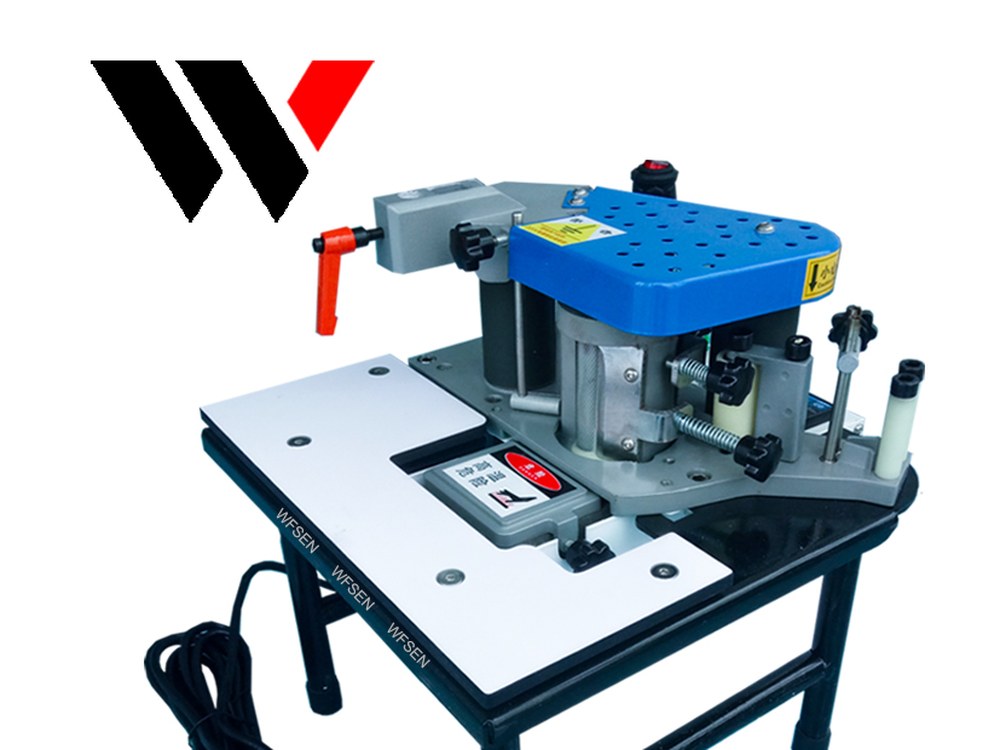
The MF160B is a bench machine in the literal sense: 380 × 330 × 380 mm and 15 kg. It takes edge tape from 0.3 mm to 3 mm, edge widths from 10 mm to 45 mm, runs at 2–6 m/min, and works at a glue temperature published as 120–170. Total power is 800 W, which is a domestic-circuit figure — this machine runs from a normal socket, not a three-phase supply.
Read its specification carefully and you will notice what it does not publish: a workpiece thickness range. That is not an omission. The MF160B is specified around the edge — tape thickness, tape width, glue temperature — because it works along the edge you present to it, rather than swallowing a whole panel on a bed. If your work is trimming and banding the edges of parts you can lift and hold, that is exactly the right design. If you need to push a full 2440 × 1220 mm panel through and have it come out the other side, it is not.
The MF202 is a different class of object. It is still small — 1300 × 500 × 500 mm and 80 kg — but it is a straight-line machine with its own feed and its own driven units:
Compare that unit list with the MF160B's single 800 W total and the difference in kind is obvious. The MF202 has its own cutting and scraping motors and its own polishing motors, which means the overhang is taken off by the machine rather than by the operator with a hand tool.
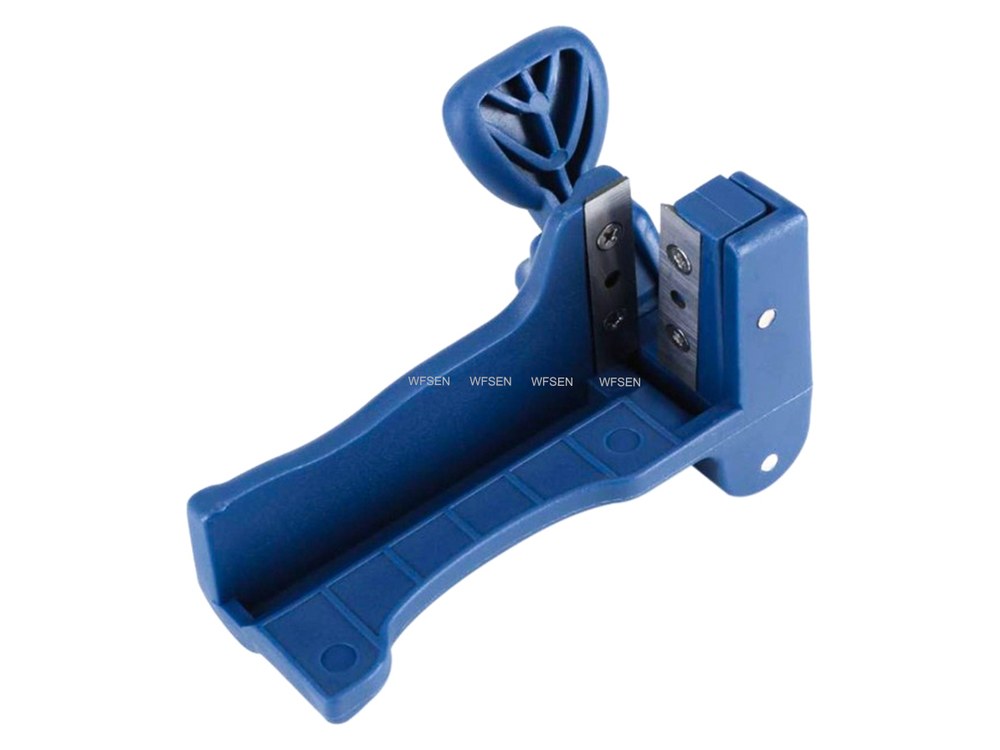
The picture above is the tool that sits at the other end of this decision. On the MF160B, finishing the overhang is manual work with a hand trimmer like this one. On the MF202 it is a motorised operation on the machine. For a few panels a day the hand trimmer is perfectly reasonable — and it is why the MF160B costs what it costs. For a few hundred panels a month it is the thing that will slow you down.
Before you compare prices, answer one question honestly: does a full panel have to go through the machine, or only its edge?
The second case is also where the compact machine's own limit appears, and it is worth stating plainly: the MF202 takes workpieces from 5 mm to 50 mm thick. Thicker build-ups, or a laminated panel over that figure, are outside its envelope, and no amount of careful setup changes that.
| Parameter | MF160B mini | MF202 compact |
|---|---|---|
| Edge tape thickness | 0.3–3 mm | — (machine specified by workpiece, not tape) |
| Edge width | 10–45 mm | — |
| Edge band | 10–40 mm | — |
| Workpiece thickness | not published | 5–50 mm |
| Feed speed | 2–6 m/min | 0–6 m/min |
| Motor / total power | 15 W motor, 800 W total | 2 kW heat + 0.8 kW × 2 cutting/scraping + 0.37 kW × 2 polishing |
| Glue working temperature | 120–170 | — (2 kW heating) |
| Overall size | 380 × 330 × 380 mm | 1300 × 500 × 500 mm |
| Weight | 15 kg | 80 kg |
Note the dashes: they are the specification talking. The MF160B is published as an edge-processing machine and the MF202 as a workpiece-processing machine. Buying on a single number — usually weight or price — without reading which of the two specification styles the machine uses is how people end up with the wrong one.
It is worth being direct about this, because the answer decides whether you buy small at all.
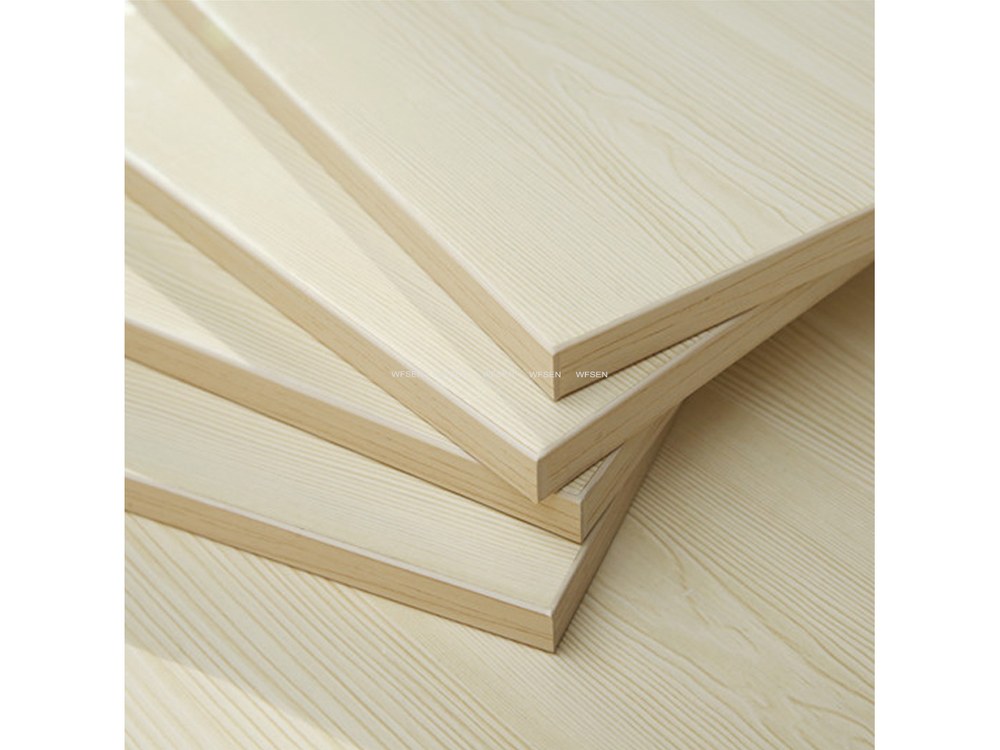
A compact machine is not a compromise on quality — it is a compromise on throughput. The edge it produces depends on four settings, and all four are in your hands rather than the machine's.
1. Glue working temperature. The MF160B publishes a working temperature of 120–170. Where in that band you sit is decided by your adhesive supplier's data sheet, not by the machine. Set it from the sheet once and write the figure on the machine so the next operator does not have to guess.
2. Feed speed. The bench unit runs at 2–6 m/min and the compact straight-line machine at 0–6 m/min. On both, the most common cause of a bad edge is not speed — it is the panel drifting away from the fence, which starves the joint of glue along part of its length. Slow down until the panel stays flat against the fence for the whole pass, then keep that speed every time.
3. Pressure between roller and panel. Too little and the tape sits proud of the panel face; too much and the glue is squeezed out of the joint. It is a mechanical setting, and it drifts as the rollers wear. Check it against a scrap panel at the start of a batch, not in the middle of one.
4. Tape thickness. The MF160B takes 0.3–3 mm tape. Thin tape in the 0.4–1 mm range is the forgiving choice and is what most small-shop work uses. At 2–3 mm the tape itself is thick enough to resist the roller, so the glue and temperature settings have to do more of the work — that is the case where a scrap test panel is not optional.
On the bench machine there is a fifth variable, and it is a person: the hand trimmer. Trimming the overhang flush without digging into the panel face is a skill, and it is the reason small shops often keep one operator on this job. On the compact straight-line machine that variable is removed — the cutting and scraping units are motorised — which is the single biggest practical difference between the two models in daily use.
Full published figures for both compact models are in the table above. Neither machine carries a pre-milling or corner-rounding station, and neither is designed for curved work — both of those start at the manual and automatic classes.
Can the MF160B edge a full 2440 × 1220 mm panel?
It is published as an edge machine — tape thickness 0.3–3 mm, edge width 10–45 mm, edge band 10–40 mm — and it is a 15 kg bench unit. It is built around presenting an edge to it, not around running a full sheet over a bed. For full sheets you want the MF202 or larger.
What is the maximum panel thickness a compact machine will take?
The MF202 is specified for workpieces from 5 mm to 50 mm thick. That is the number to check against your thickest build-up before you buy.
Do I need three-phase power?
Not for the MF160B — its total power is 800 W. The MF202 has a 2 kW heater and four separate unit motors, so its supply is a machine circuit, not a domestic one. Confirm the supply with your electrician before the machine arrives.
How much does a small edge banding machine cost?
Price depends on the model, the configuration and the destination, so we quote per enquiry rather than publishing a figure. Send us the parts you need to edge and we will come back with the machine that fits.
Can I band curved parts with a compact machine?
No. Both models here are straight-line machines. Curved and radiused work needs the manual and curve class, which follows radii down to 20 mm.
Two facts decide which compact machine is right: the largest part you have to edge, and whether the overhang is going to be trimmed by a motor or by your hands. Tell us those two things and we will tell you whether you need the bench unit, the compact straight-line machine, or something bigger.
Both models sit in our edge banding machine range alongside the portable class for site work. If you are not yet sure which class you need at all, start with our guide to portable, manual, automatic and curve edge banding machines, then send us your panel and tape specification.