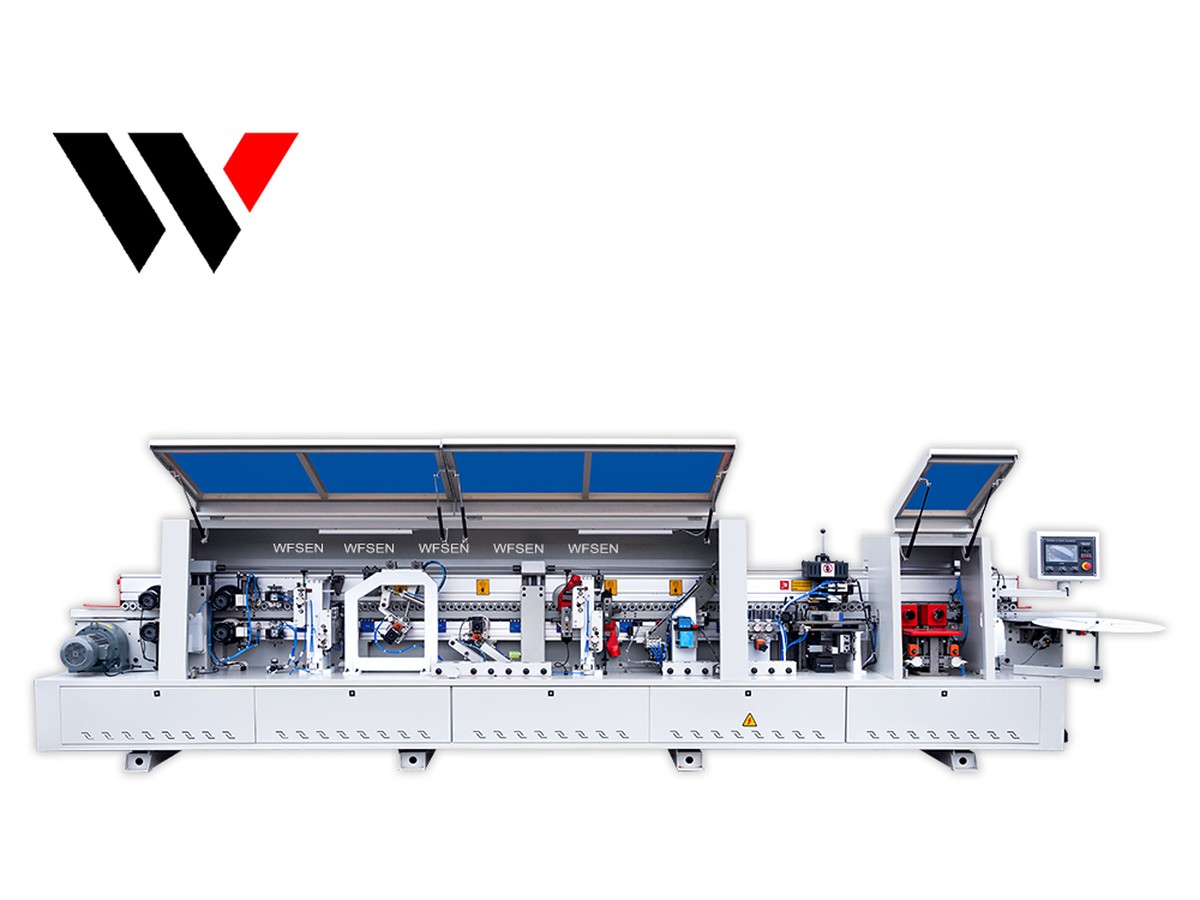
Short answer: the price of an edge banding machine is driven mainly by how many stations it has, whether the trimming is motorised or done by hand, the class of the frame and feed system, the power supply and site infrastructure it needs, and the tooling that has to be replaced over its working life. Panel capacity matters far less than buyers expect: two machines that take the same panel thickness can differ enormously in price.
We do not publish a price list, because the same model is configured differently for different workshops and the delivered cost depends on destination, tooling and options. What we can do — and what this article does — is show you exactly which specification decisions move the number, using our own model range as the worked example, so that when two quotations land on your desk you can see what the difference is actually made of.
If you want a single indicator of what an edge banding machine costs, read its weight. Weight is cast iron, steel and motors, and it is the least negotiable part of the build. Across our own range the ladder runs from 15 kg to 2,200 kg:
| Model | Class | Weight | Panel / edge range | Trimmed by |
|---|---|---|---|---|
| MF160B | Bench mini | 15 kg | tape 0.3–3 mm | hand |
| MF170B | Portable | 30 kg | board ≤60 mm, tape 0.4–3 mm | automatic cutting |
| MF202 | Compact straight-line | 80 kg | board 5–50 mm | motorised |
| MF260B | Manual / curve | 180 kg | tape 0.15–5 mm, radius from 20 mm | motorised |
| MF360B | Full automatic, 6 stations | 1,400 kg | board 10–60 mm, tape 0.4–3 mm | motorised |
| MF630A | Full automatic, 8 stations | 2,200 kg | board 10–60 mm, tape 0.4–3 mm | motorised |
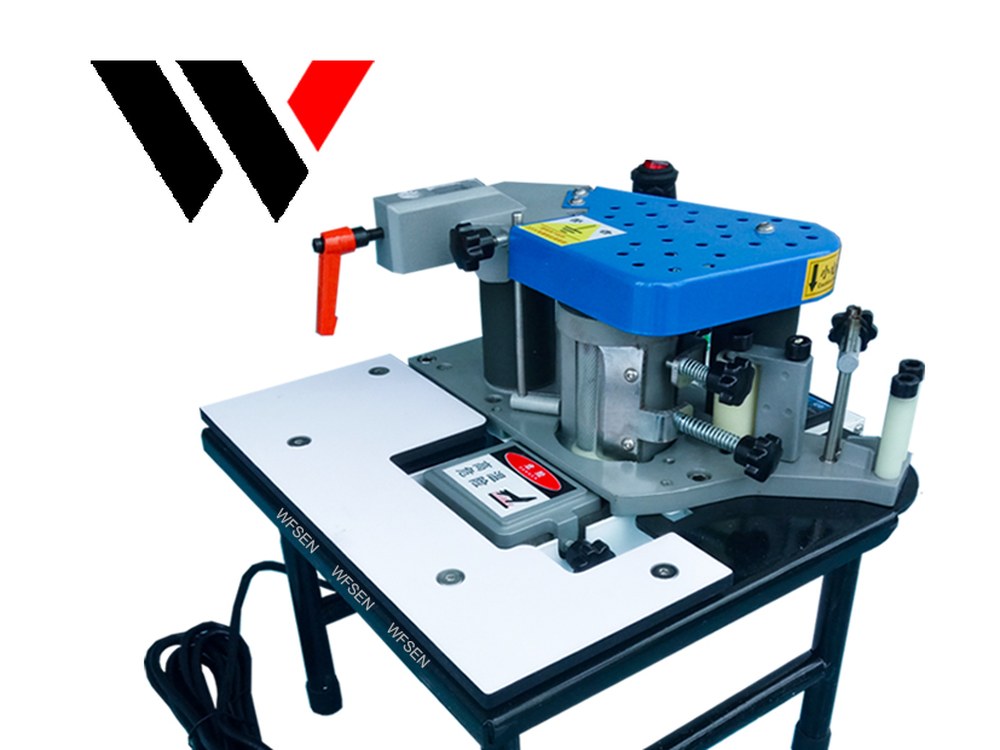
Read the last two rows together and the point becomes concrete. The MF360B and MF630A take exactly the same panel — 10–60 mm thick, edge tape 0.4–3 mm, both feeding at 13–23 m/min. Nothing about their panel capacity differs. What differs is that the MF630A carries two more stations, and that shows up as 800 kg more frame, 2,450 mm more length, and 4.5 kW more installed power. That is where the price gap comes from: not from capacity, from stations.
The published weight, outline size, power and feed figures for all eleven models in the range are collected in edge banding machine sizes and weights.
A station is not a feature on a list. It is an assembly: its own motor, its own tooling, its own pneumatic cylinders, its own adjustment, mounted on its own section of bed. Adding one station lengthens the machine, stiffens the frame requirement, and adds a control channel.
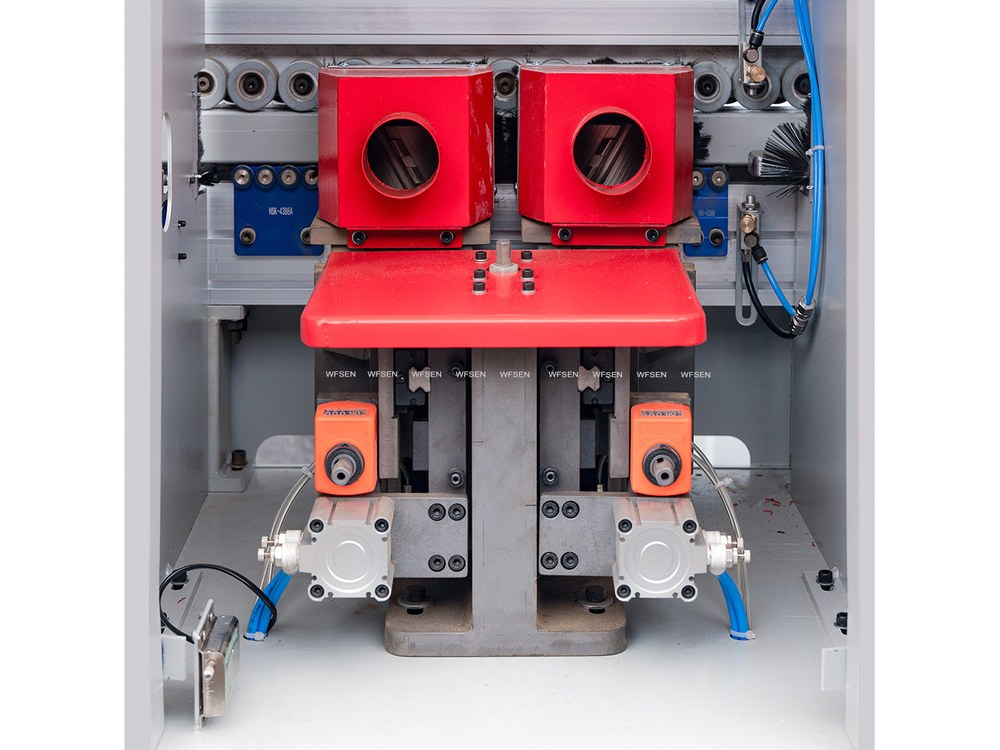
The two stations that move price most in our range are pre-milling and corner rounding. Pre-milling has to sit first in the line and remove material before the glue is applied; corner rounding sits near the end and shapes the tape at the corners. Both are the difference between a six-station and an eight-station automatic machine. If neither is needed for the panels you actually sell, you are paying for bed length and motors you will never use.
This is the clearest dividing line in the whole category, and it is visible in the installed power. Compare two machines that both band an edge:
Five motors against one is the price difference, and it is also the labour difference: a hand-trimmed edge takes an operator per panel, a motorised edge takes an operator per batch. If you are banding dozens of panels a month, motorised trimming is not a luxury — it is the cheaper machine over a year of labour.
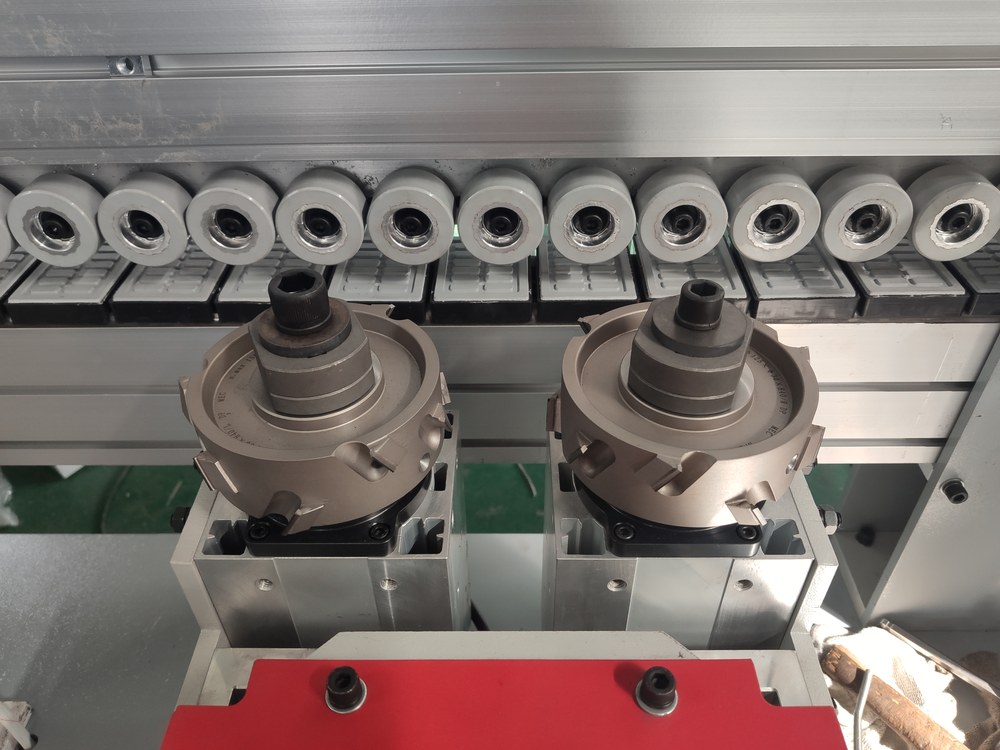
Feed speed is a good proxy for how the panel is moved, and how the panel is moved determines how much steel the machine needs.
Running a panel at 23 m/min without it wandering takes a chain or belt feed, a pressure beam and a bed long enough to control the panel before and after every station. That is why the automatic machines are 4,100 mm and 6,550 mm long while the bench unit is 380 mm across. The bed is not packaging; it is the machine.
Two machines with similar purchase prices can have very different installed costs, because the machine is only part of what has to be bought.
Ask what consumable tooling the machine carries and where it comes from. Cutter heads, scraper blades and trimming knives are replaced on a schedule, and the cost of these parts over three or five years can be a meaningful fraction of the machine price. A quotation that is cheaper on the machine but locks you into scarce tooling is not cheaper.
If you are still working out which class you need at all, start with the overview of portable, manual, automatic and curve edge banding machines.
How much does an edge banding machine cost?
The class and the station list decide it, not a single figure, which is why we quote per configuration. The largest single driver is how many stations the machine carries and whether the trimming is motorised: a bench machine with a hand trimmer and a 2,200 kg eight-station automatic machine both band an edge, and they are not in the same price bracket or the same labour bracket.
Is a more expensive machine always the better choice?
No. The MF630A is longer, heavier and more powerful than the MF360B, but both take the same 10–60 mm panel at the same 13–23 m/min. The extra cost buys pre-milling and corner rounding — which only matter if you run pre-glued tape, laminated panels, or customers who see the corner of the finished part.
What is the cheapest way to get into edge banding?
A bench machine such as the MF160B, at 15 kg and 800 W, needs no special power supply and almost no floor space, and the overhang is finished with a hand trimmer. It is the right entry point for low volume and small components; it is not a machine for running full sheets.
Does panel thickness drive the price?
Very little. Our portable model already handles boards to 60 mm and the automatic models cover 10–60 mm. Price tracks stations, frame and feed system far more closely than it tracks thickness.
Why do you not publish prices?
Because the configuration changes the machine. Adhesive type, station list, tooling, voltage and destination all vary, and a headline figure would be wrong for most buyers. Send us the panel and tape specification and we will quote the class that fits.
Four facts are enough for us to price your requirement properly: the largest panel you have to edge, the tape you buy, whether the corner of the finished part is visible to your customer, and the power supply available where the machine will stand. Give us those and we will tell you which class you need — and which one you do not.
The full range is on our edge banding machine page, and you can send your specification directly to us here.