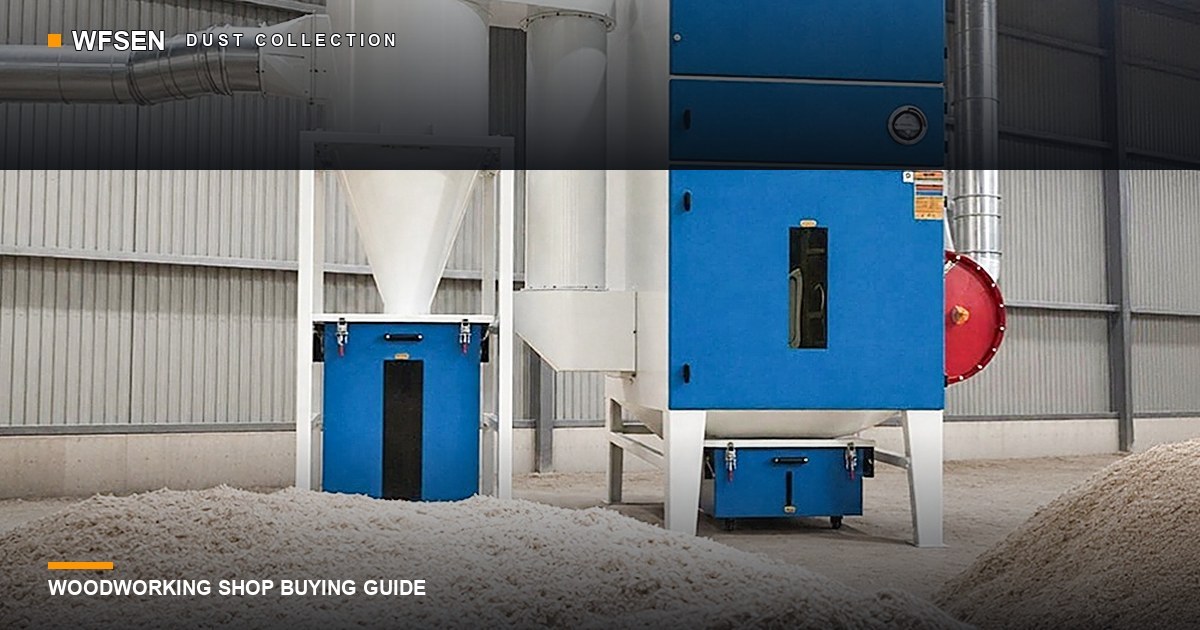
Short answer: sizing a cyclone dust collector is an air-volume decision first and an equipment decision second. Add up the extraction volume each of your machines needs at its capture point, add what the duct run consumes in static pressure, then match the total to a collector's rated airflow — not to its price. Our reference machine in this class, the 15 kW cyclone pulse collector, is published at 14,000 m³/h fan exhaust airflow with 96 m² of filter area across 32 cartridges, automatic pulse jet cleaning, and a 70 dB room noise figure. Every number in this guide is taken from that machine's published specification.
Choosing a cyclone dust collector for your woodworking shop is an engineering decision, not a shopping decision. An undersized system leaves fine dust in the air your operators breathe and lets it settle on freshly finished panels; an oversized system simply burns money on capacity you never use. The reliable way to buy is the way a plant engineer would approach it: work out the air volume first, then check static pressure, filter area and automatic cleaning, and only then compare safety features and the supplier behind the machine.
Dust collection starts with an honest inventory of the machines you run. CNC routers throw fine dust at high velocity and need strong capture close to the spindle; edge banding lines release trimming dust and offcuts; panel saws generate heavy chips; and sanding stations produce the finest dust of all. Each machine type imposes a different load, so a collector sized for one sanding station will be overwhelmed by a full panel processing line.
Work through the calculation in this order. First, list every dust-producing machine and estimate the extraction volume each one needs at its capture point. Second, add the duct network: every branch, bend and gate consumes pressure, and a long undersized duct will starve the machine at the far end of the line. Third, compare the total against the rated air volume of the collector. The reference unit is published at 14,000 m³/h of fan exhaust airflow — a scale that suits a mid-size production shop centralising several woodworking workstations into one system.
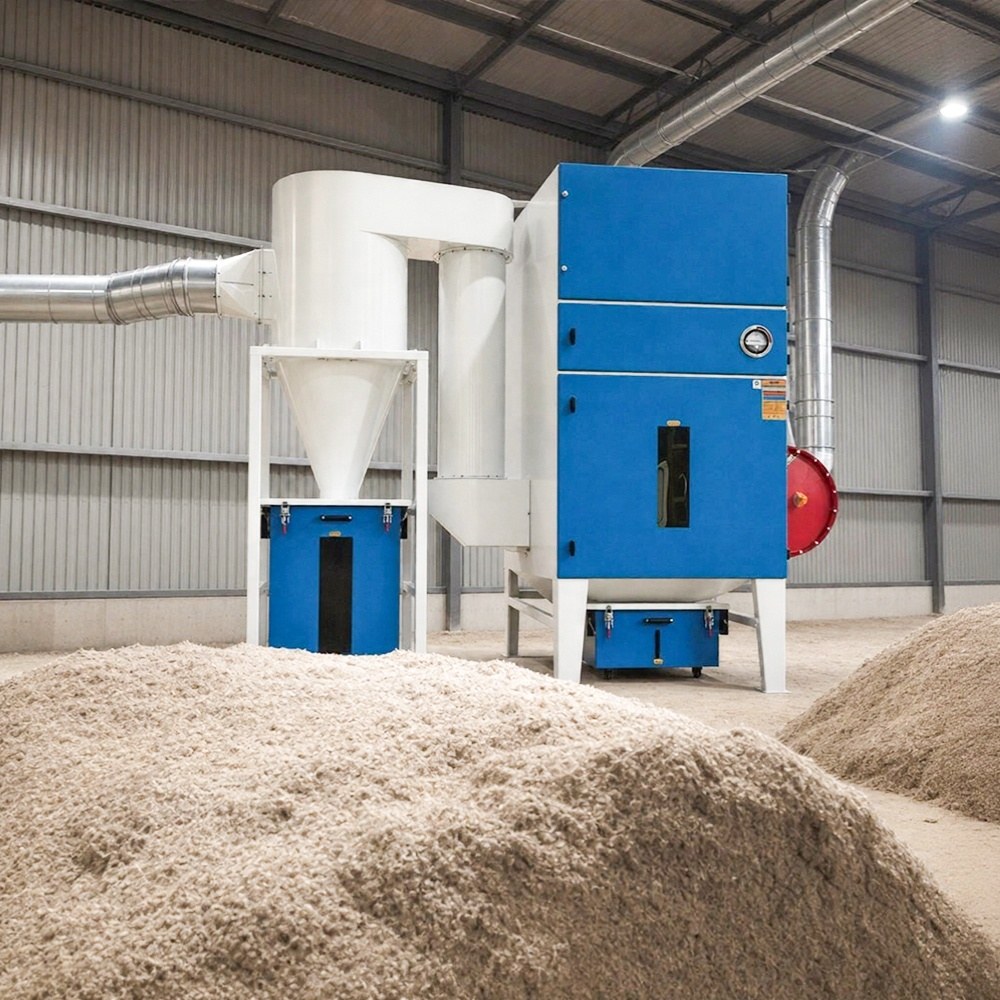
A single central collector keeps a whole CNC line clear of sawdust and chips.
Map the layout before you commit. A scale drawing of the workshop, machine positions and proposed duct routes will show whether the collector position, branch sizes and bin access work in practice. If you are unsure how to configure the layout, send the plan to the manufacturer and ask its engineers to propose the ducting arrangement.
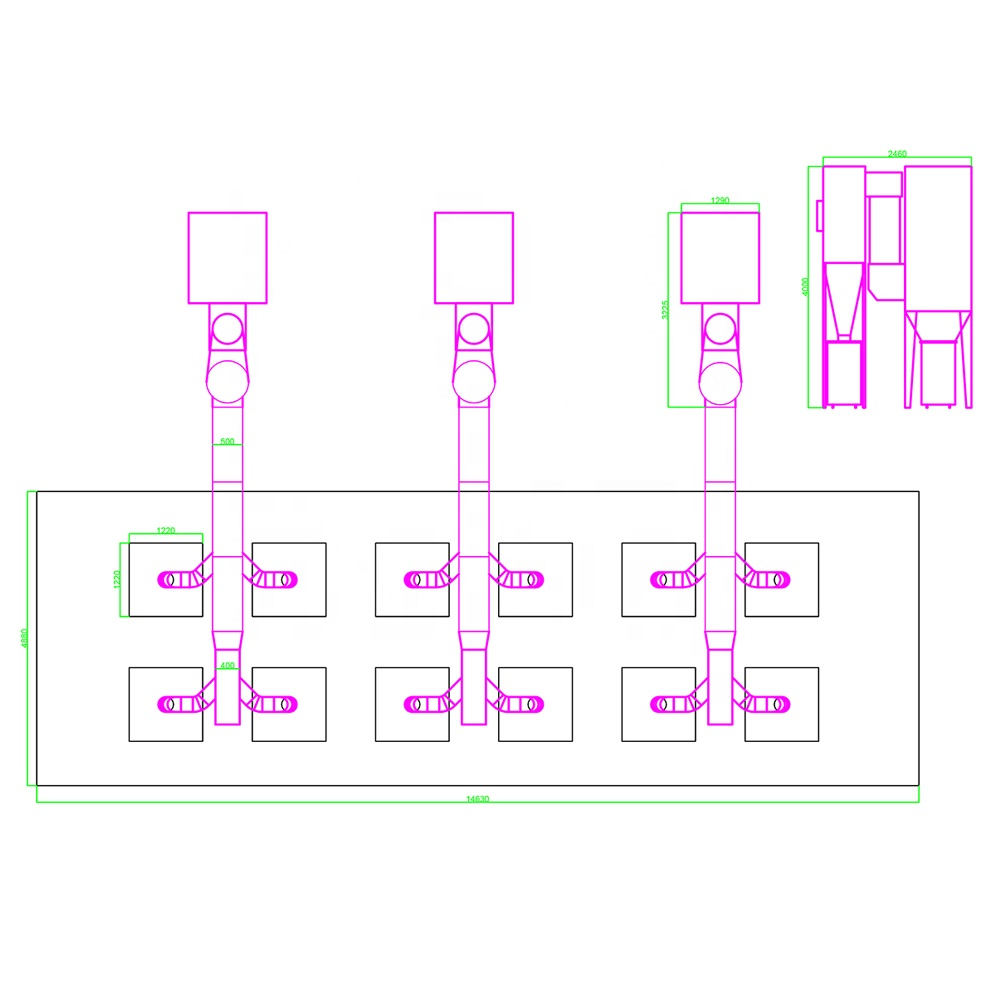
A CAD ducting layout turns guesswork into an engineered system.
Two collectors can advertise the same air volume and perform completely differently, because the number that matters on a real installation is static pressure. Your ductwork, filter media and every bend in the line consume pressure; if the fan cannot overcome that resistance, the airflow at the machine end collapses no matter what the brochure says. Always read air volume and pressure together, and ask the supplier to state the airflow at the pressure your duct run actually presents — that is the figure to compare, and it is the figure most quotations leave out. A distributor whose only number is a headline airflow has not told you whether the machine will hold suction at the far end of your line.
This is also why layout matters more than nameplate size. Two workshops can run the same collector with completely different results, purely because one has short, generously sized branches and the other has a long run with tight bends. If your machines are spread across a large hall, ask for the ducting design at the same time as the quotation, and treat the two as one purchase.
Coarse chips are the easy part of wood dust; the fine fraction is what travels through the workshop, coats machines and reaches operators. That is what a two-stage design is for. In the WFSEN collector, cyclone separators first throw coarse chips and heavy particles into collection bins before the air reaches the filter media. The pre-cleaned air then passes through 32 cartridge filters, each Φ150 × 1000 mm, built from high-strength polyester non-woven media, giving a total filter area of 96 m².
More filter area means a lower air-to-cloth ratio, which means less frequent cleaning and longer media life. Protect the filter media from the heavy load first, and the whole system becomes cheaper to run over the life of the machine.
Read the two stages as separate jobs. The cyclone does the rough work and keeps the cartridges from being buried; the cartridges do the fine work. A machine with good airflow but a small filter area will hold suction for the first part of a shift and then fall away as the media loads up — which is the complaint most often reported by buyers who compared only the airflow figures.
Filters only keep working if they are cleaned, and the difference between a good collector and a poor one often shows up here. The reference machine uses automatic pulse jet cleaning with solenoid impulse control. As dust builds on the cartridge surface, short bursts of compressed air flex the filter media and drop the dust cake into the collection bins at preset intervals while the machine keeps running. Production never stops for manual filter maintenance, and suction stays consistent from the first hour of a shift to the last.
The alternative — shaking or brushing cartridges by hand — costs you a shutdown every time, and in practice it gets deferred. The dust load then climbs, airflow drops, and the workshop air quality quietly degrades. Automatic cleaning is not a luxury option on a machine of this size; it is what keeps the published performance true on day 300 rather than only on day one.
Not every shop needs a central cyclone unit. Our smaller MF9030 dust collector covers the single-machine end of the range, published across five models — MF9022 / MF9030 / MF9040 / MF9055 / MF9075 — with bag capacity from Ø480 × 1 to Ø480 × 4, power from 2.2 kW to 7.5 kW, wind capacity from 2,350 to 8,500 m³/h at a spindle speed of 2,900 r/min, and machine weights of 50 / 70 / 170 kg.
The choice between this class and the cyclone class is not a question of quality — it turns on how many pick-up points you have and how fine the dust is. A bag-type unit connected to one or two machines can be wheeled into position and emptied by hand. Once the shop has four or more collection points, or the work is dominated by fine sanding dust, the two-stage cyclone design is the one that pays.
Most shops centralising for the first time add up the machines and stop there. Gates matter as much as machine count: if every branch is open at once, the collector has to serve the whole shop simultaneously, and each machine sees a fraction of the rated airflow. Most shops run a system where two or three stations work at any moment, and the duct design should reflect that — branch sizes and gate discipline are what turn one 14,000 m³/h machine into a system that serves a full panel line.
Practical points worth settling before you buy: keep the main run as straight as the building allows, place the collector as close to the dust sources as you reasonably can, make sure the collection bin can be reached and emptied without moving machines, and check that the bin capacity matches your production volume rather than your floor space. Our reference unit's collection bin is published at 735 × 570 × 1140 mm, and the machine itself at 2630 × 2460 × 3600 mm — measure those against your door widths and headroom before ordering.
If your shop mixes panel processing with solid wood, expect the ducting to do more work than you first expect. A panel saw feeding a banding line produces a different dust profile from a sanding station, and both are different again from a wide belt sander. Write the machine list out with dust type alongside each entry, and the sizing conversation becomes much shorter.
Every figure below is published on the machine's own specification table.
| Specification | Published value |
|---|---|
| Fan exhaust airflow rate | 14,000 m³/h |
| Fan motor power | 7.5 kW |
| Filter area | 96 m² |
| Cartridges | 32 pcs |
| Filter cartridge size | Φ150 × 1000 mm |
| Cleaning | Solenoid valve impulse control (automatic pulse jet) |
| Overall size | 2630 × 2460 × 3600 mm |
| Dust collection bin | 735 × 570 × 1140 mm |
| Room noise | 70 decibel |
| Distribution box | Explosion-proof |
| Intelligent control | Energy conservation 15~20 |
Read the table as a package rather than a shopping list. Air volume without static pressure, filter area without automatic cleaning, and cleaning without after-sales support each tell only part of the story; a cyclone dust collector for woodworking only performs when every stage of the system is designed to work together. If a supplier quotes you a machine on airflow alone, ask for the rest of these figures — the ones who can produce them are the ones whose machine will still perform after a year of shifts.
Fine wood dust is combustible dust in virtually every jurisdiction, and a dust collector concentrates that hazard by design. Sound risk management starts with the basics: capture dust at the source, keep the workshop clean, keep ductwork properly grounded, and inspect for ignition risks on a routine schedule. When a site assessment calls for hardened equipment, the WFSEN collector is available with an explosion-proof distribution box as a published configuration, so you can specify the machine to match your risk assessment. Confirm the requirements with your local authority and your insurer before you specify, and ask your supplier for a written configuration that matches your hazard zone.
Qingdao WFSEN Mechanical And Electrical Co., Ltd. manufactures woodworking machinery and dust collection systems in Qingdao, Shandong — established in 2008, on a 16,000 m² site with 200 workers — and supplies them factory direct to woodworking, furniture and CNC processing customers worldwide. Machines ship with a factory inspection record, and video inspection can be arranged before delivery so you can watch your unit run before it leaves the factory floor. Production lead times run 6 to 30 days depending on the configuration.

Customisation is part of the standard service. WFSEN offers OEM and ODM options covering power rating, voltage, PLC control configuration, accessories and branding, so the system is built around your production line. If you are planning a new dust collection system or upgrading an existing one, send your workshop layout and machine list to the WFSEN engineering team, and you will receive a configuration recommendation matched to your ducting, your dust load and your safety requirements.
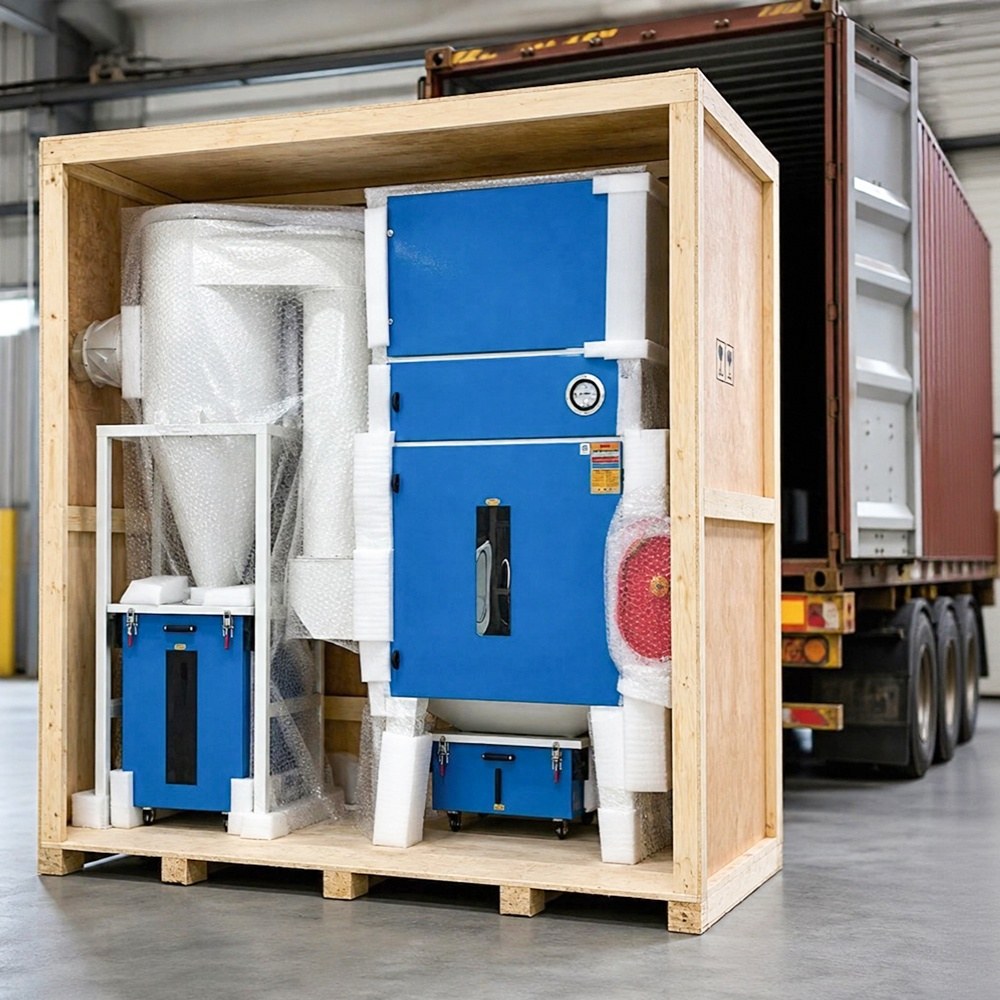
Careful export packing keeps the collector safe on the way to your workshop.
How do I know what airflow my shop needs?
Build the number up from the machines, not down from the machine you happen to be looking at: add the extraction volume each pick-up point needs, add the allowance your duct length and bends consume, and compare the total with the collector's published airflow.
Why does static pressure matter more than airflow?
Because airflow is measured at the fan and static pressure is what the duct run takes away before the air reaches your machine. A collector that cannot overcome your duct resistance will deliver far less than its headline figure at the far end of the line.
What does the two-stage design actually do?
The cyclone stage separates heavy chips and coarse sawdust before the air reaches the cartridges. That keeps the fine filters from being buried by material the cyclone can handle more cheaply, which is why media life is longer on a two-stage machine.
Is automatic pulse jet cleaning worth it?
On a machine of this class, yes. Manual cleaning means shutting down to do it, and in practice it gets postponed. Automatic cleaning keeps the published airflow honest across a shift instead of only at the start.
How many machines can one collector serve?
That depends on how many gates are open at once and how the ducting is sized, not on the collector's airflow alone. Two or three stations working together is a very different load from every branch open at the same time.
Should I buy the small bag-type unit or the cyclone?
Count your pick-up points and look at the dust. One or two machines and mostly coarse chips suit the MF9030 bag-type range; four or more points, or work dominated by fine sanding dust, is where the two-stage design earns its keep. For the wider machine context, see the workshop equipment range.
For answers specific to your shop, send your workshop layout and machine list to the team — the configuration follows from the layout.