A horizontal band saw is usually bought from a specification sheet, and the sheet is where the argument happens. Two model codes share one series number, six working widths are spread across them, and four of the lines that decide a purchase read almost the same at a glance.
This page is the reference version: every published figure for both ranges, gathered in one place, read field by field. It does not argue about which machine suits which shop. That argument needs your timber and your weekly volume, and it belongs on the other page.
Both ranges carry 3928 in the code. The MJA is listed as MJA3928-300/400/650 and the MJB as MJB3928-400/500/650. Each suffix is a working width in millimetres.
Six machines, then. Not six variants of one decision: the two narrowest MJA units and the two narrowest MJB units sit at different widths, and at 650 mm the two ranges meet again and only the wheel separates them.
| Working width | Blade size | Feed speed | Total power | Weight | Dimensions |
|---|---|---|---|---|---|
| 300 mm | 4572 x 27 x 0.9 mm | 0-20 m/min | 16.68 kW | 1800 kg | 2700 x 2300 x 2000 mm |
| 400 mm | 4572 x 27 x 0.9 mm | 0-20 m/min | 20.18 kW | 1900 kg | 2700 x 2300 x 2000 mm |
| 650 mm | 5172 x 27 x 0.9 mm | 0-20 m/min | 23.68 kW | 2000 kg | 2700 x 2400 x 2000 mm |
Wheel diameter 711 mm. Cutting thickness 3-200 mm, maximum working thickness 300 mm. Air pressure 0.5-0.8 MPa.
Two blade lengths across three widths is the line worth noticing. A shop running the 300 and 400 units keeps one blade size on the shelf; add the 650 and it keeps two, and the second one is the expensive size.
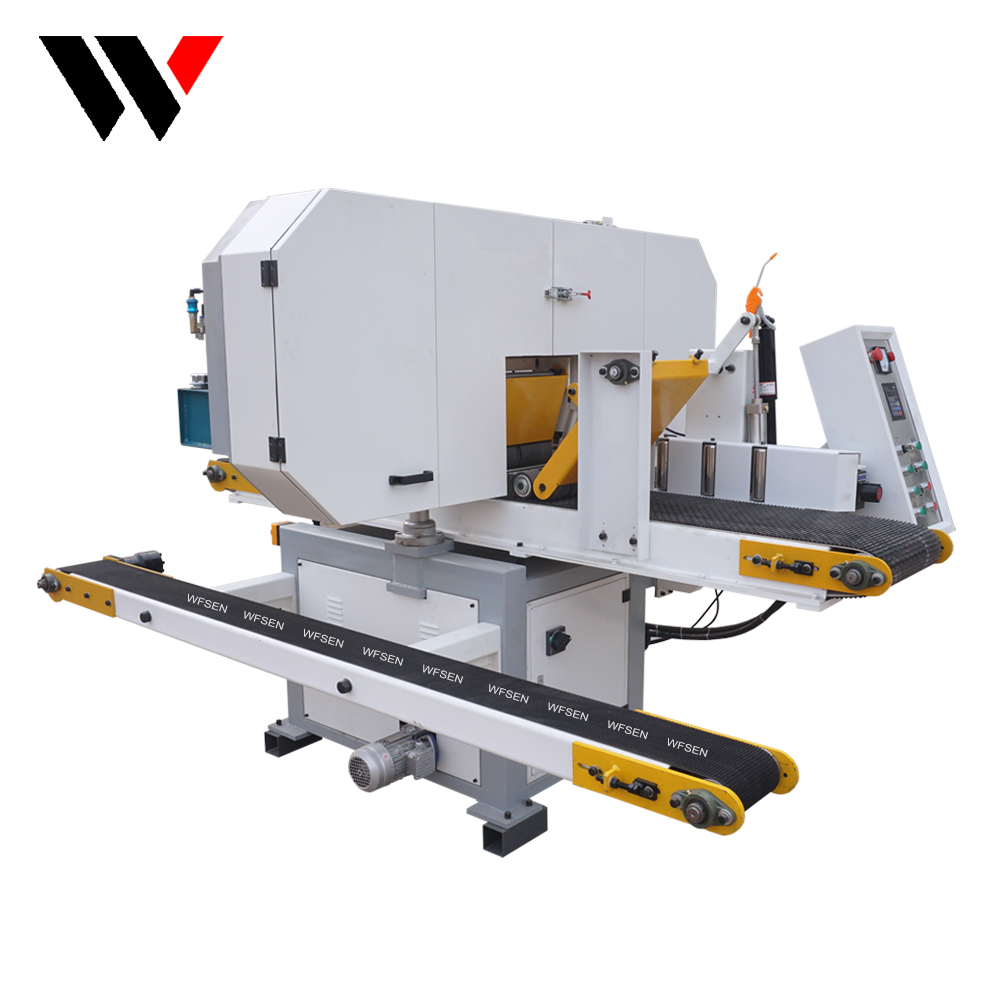
| Working width | Saw length | Feed speed | Total power | Weight | Dimensions |
|---|---|---|---|---|---|
| 400 mm | 4330 mm | 0-14 m/min | 16.47 kW | 1700 kg | 2300 x 2550 x 1950 mm |
| 500 mm | 4885 mm | 0-14 m/min | 20.37 kW | 1900 kg | 2400 x 2550 x 1950 mm |
| 650 mm | 5435 mm | 0-14 m/min | 20.37 kW | 2050 kg | 2600 x 2550 x 1950 mm |
Wheel diameter 650 mm with a 65 mm rim. Working thickness 2-200 mm, with no separate maximum published. Cutting length is listed as 300 mm or more.
Three widths, three saw lengths, no shared size anywhere in the range. A shop that moves a machine between widths changes the blade and resets tracking every time.
MJA starts at 300 mm, jumps to 400, then 650. MJB starts at 400 and steps through 500 to 650.
A widest cant of 350 mm removes the MJB from the quotation entirely. Cutting between 400 and 500 mm all week puts the MJB closer to the work and stops you paying for width that never gets loaded.
The MJA sheet carries two figures: cutting thickness 3-200 mm and maximum working thickness 300 mm. They are not the same claim, and the gap between them is 100 mm. Read both lines before you size a machine around a 250 mm block.
The MJB sheet carries one: working thickness 2-200 mm. On that machine 200 mm is the wall, with no second number behind it.
If your blocks sit near either ceiling, put the block size in an email and keep the reply with the quotation. It costs two minutes and settles the purchase.

Twenty metres a minute against fourteen is a machine limit, not a cutting recommendation. Rubberwood and a dense tropical hardwood behave differently at the same number, and one of them leaves a face worth glueing. Timber sets the working figure.
Power climbs with width on the MJA: 16.68, 20.18, 23.68 kW. On the MJB it climbs once and then flattens: 16.47, 20.37, 20.37 kW. The narrow machines sit within a rounding error of each other; the widest ones do not.
Close to 24 kW on one machine is not a detail for the electrician to find on installation day. Add the dust collector and the compressor to the same board and the supply size stops being a formality. Ask for the electrical schedule with the quotation.
MJA runs 1800, 1900, 2000 kg; MJB runs 1700, 1900, 2050 kg. At 650 mm the MJB is heavier by 50 kg, which is the opposite of what the smaller wheel suggests. Frame design sets that figure, not wheel size.
Footprint separates them more clearly. At the same 650 mm width, MJA measures 2700 x 2400 x 2000 mm and MJB 2600 x 2550 x 1950 mm: the MJB is narrower and deeper, the MJA wider and shallower. That decides which aisle the forklift uses and whether the infeed run still fits.
Air pressure appears on the MJA sheet at 0.5-0.8 MPa and is missing from the MJB sheet. Cutting length is published for the MJB as 300 mm or more and not for the MJA.
Neither omission is a defect in the machine. It is a reminder that the missing line is the one you have to ask about, and that a supplier answering it in one sentence with a number is worth more than a brochure.
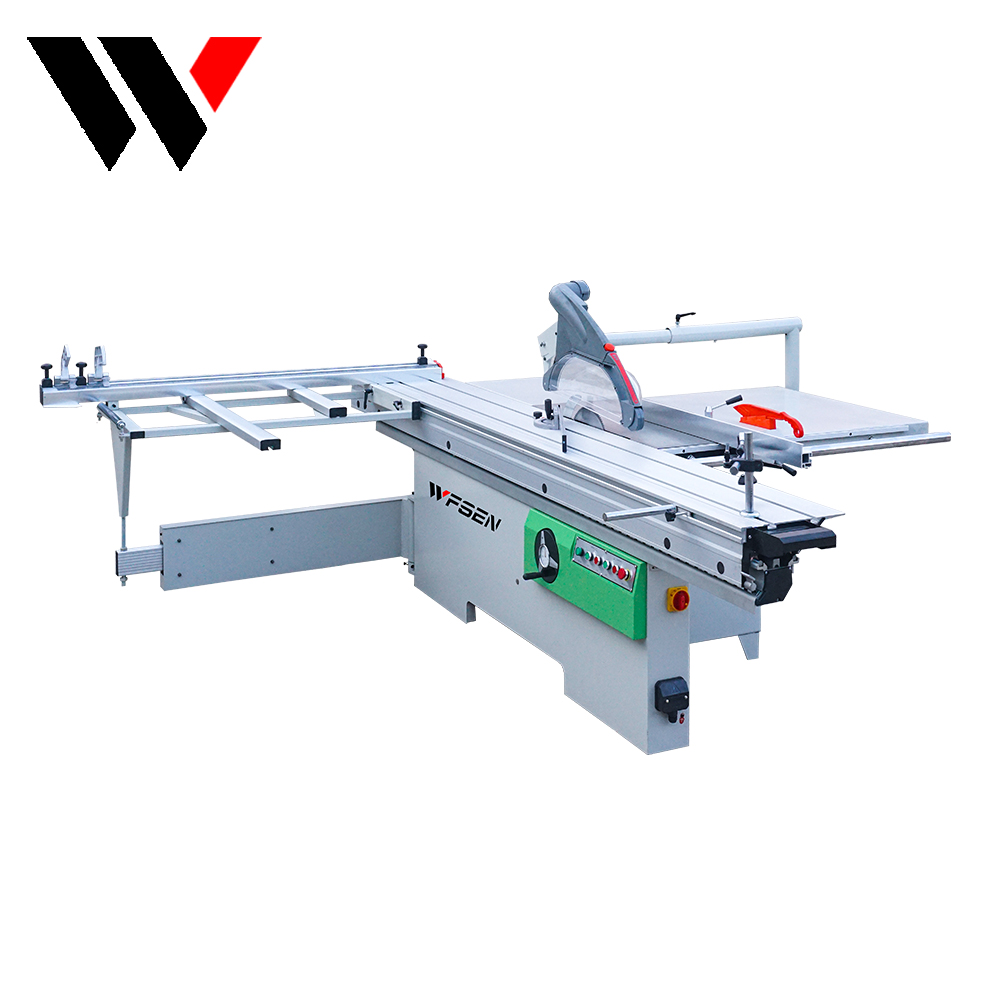
This page answers what the machines are. It does not answer which one your workshop should buy, because that depends on the widest cant reaching your yard, the thickest block you resaw in a normal week, and the length of the shortest part you run.
That reasoning sits in the MJA against MJB selection guide, which walks the same figures from the buyer side and ends with the five questions to put in writing before an order.
A band saw also gets quoted against the wrong machine fairly often. It re-cuts solid timber along its length with a narrow blade; it does not break down sheets. For that side of the shop, read the beam saw against vertical panel saw comparison instead.
The blade is a 27 mm band at 0.9 mm, thin enough to wander once the guides are tired, and a wandering blade leaves a face that needs planing rather than glueing. The sharpening routine for saw blades and planer knives is the other half of a straight cut.
Every machine listed here sits under saw machine, beside the MJR1325 reciprocating saw, which cuts a different way again.