

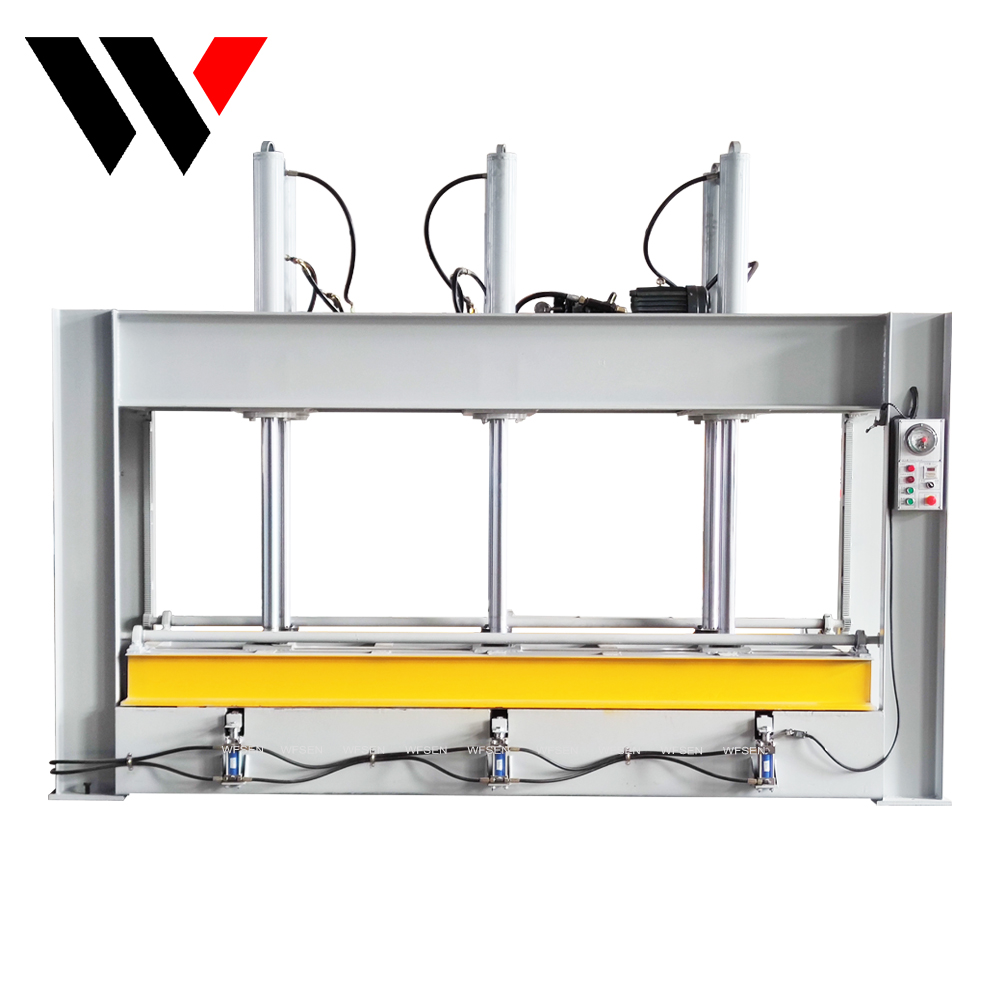


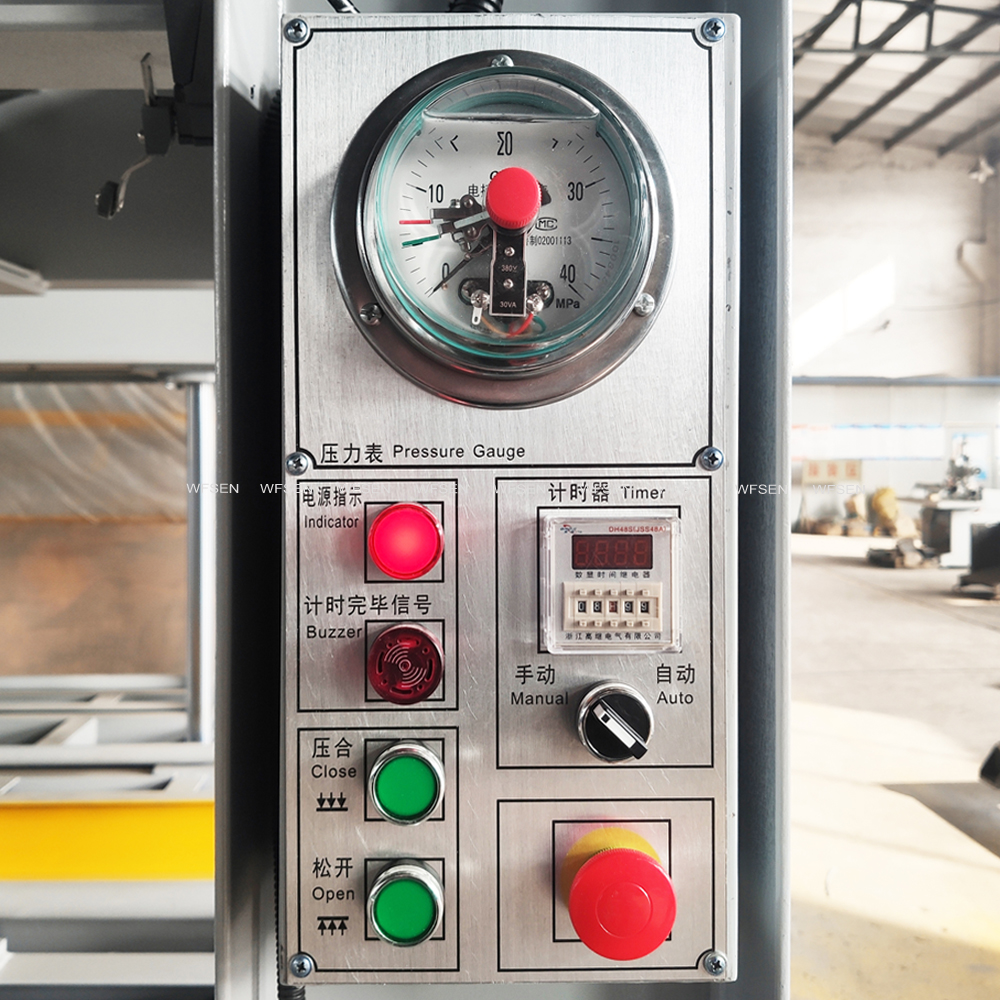
A cold press is the part of a panel line that nobody photographs and every line depends on. Glue is spread, the lay-up is stacked, and the press holds the stack flat under pressure while the adhesive sets. No heat, just time and even load.
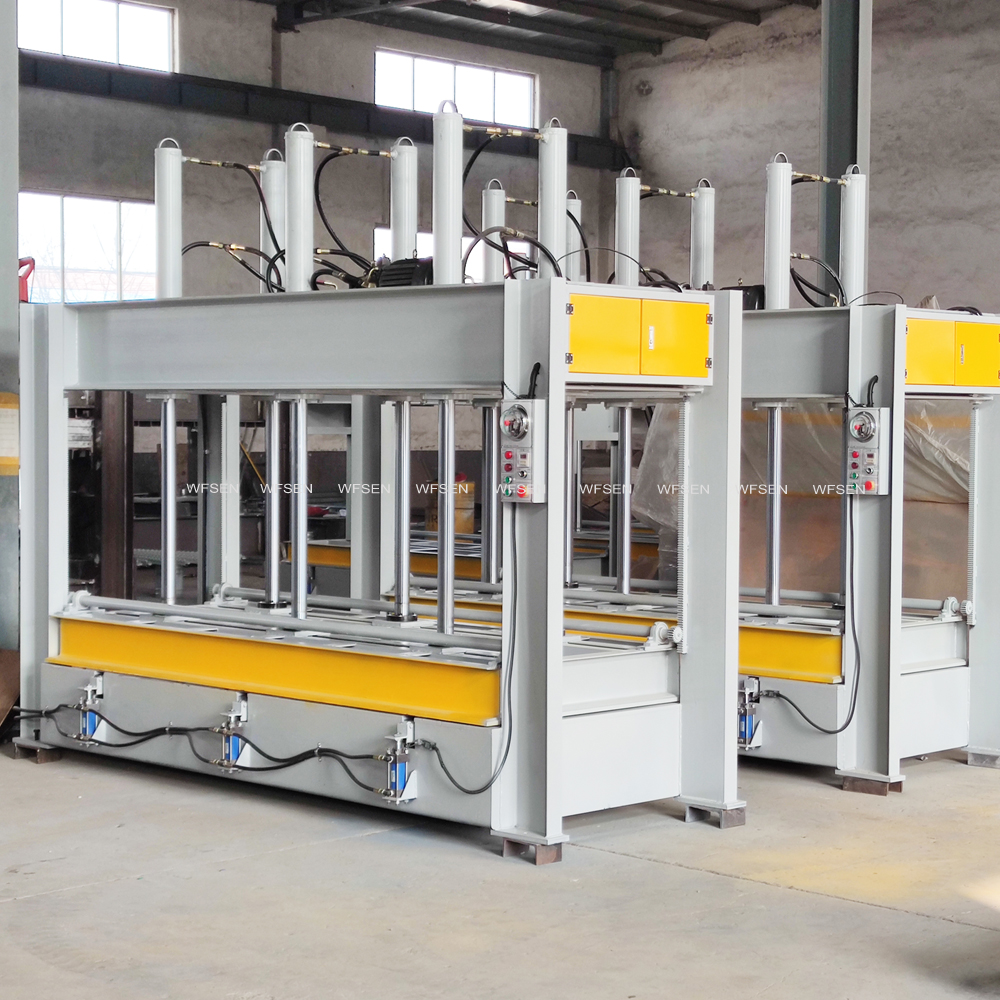
The MC100T is a 100 tonne cold press on 3050 x 1300 mm platens with a 900 to 1000 mm opening, and three rows of feeding rollers that carry the panel into the opening and out again. What follows is what those numbers mean in use, and where a cold press stops being the right tool.
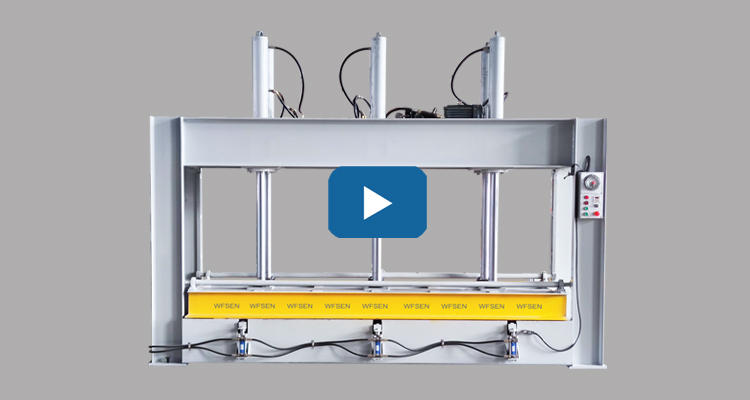
100 Tonnes on a 3050 x 1300 Platen
Tonnage by itself says almost nothing. Divide it by the platen area and you get a figure you can compare.
3050 x 1300 mm is 3.965 square metres, or 39,650 square centimetres. Spread 100 tonnes across that and the platen sees about 2.5 kg per square centimetre. The force comes from six cylinders of 100 mm diameter.
That is the useful number, because it tells you what the press is for. A hundred tonnes concentrated on a small platen is a high pressure machine. A hundred tonnes across four square metres is a moderate pressure machine, which is what cold pressing of veneered and laminated panels needs: enough load to close the glue line evenly, not enough to crush the core.
Ask any supplier for platen pressure in kg per square centimetre before you compare prices. Two presses with the same tonne rating and different platens are not the same machine.
Three Rows of Feeding Rollers
A plain cold press has a flat platen and nothing else. Getting a 3050 x 1300 mm lay-up into the opening means lifting it, aligning it and sliding it, and doing that with a stack of veneered boards is where panels get damaged and where operators get hurt.
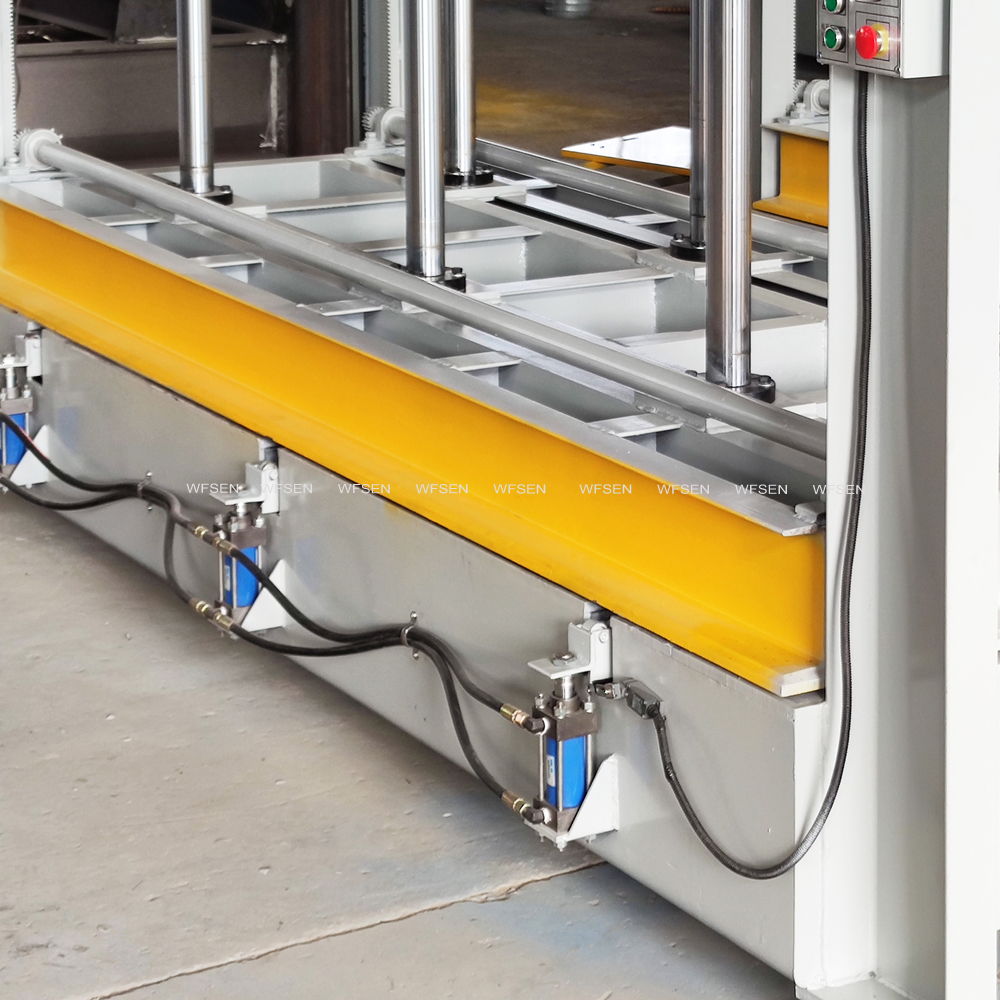
The three rows of rollers turn that into a horizontal move. The stack is built on the infeed side, rolled in, pressed, rolled out. On a platen this size that changes the labour requirement from two people manhandling a panel to one person guiding it, and it changes the reject rate more than any other feature on the machine.
The rollers also set the working height, which is why the platen opening matters: 900 to 1000 mm of clear opening is what allows a stack of veneered panels plus a caul plate to pass without being forced.
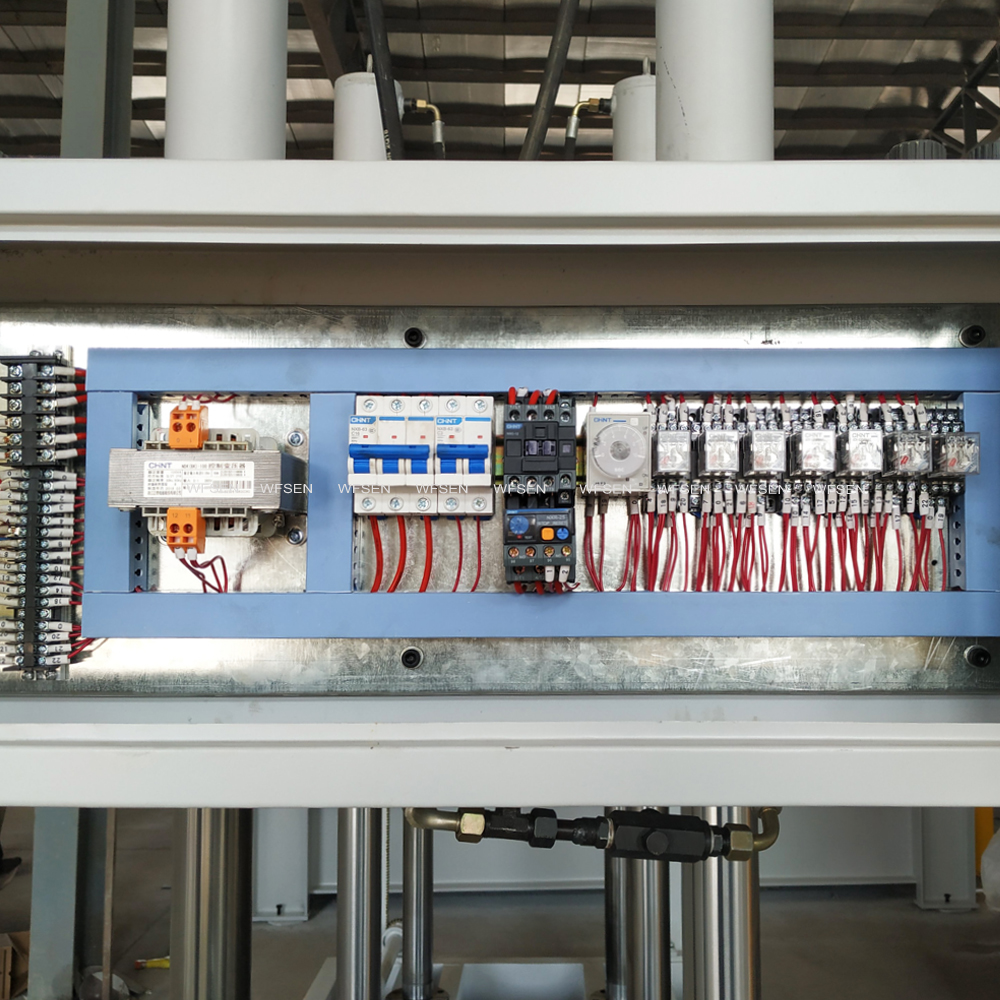
Cold Pressing Is a Time Problem, Not a Pressure Problem
Once the press is closed, the pressure is not what decides the result. Time is. The adhesive needs to reach handling strength, and that is a property of the glue, the spread rate and the room temperature, not of the tonnage.
Which means the useful question is how many stacks you can have in the press at once. One opening is one stack. If your cycle is forty minutes and the glue needs forty minutes, the press is the bottleneck and no amount of pressure fixes it.
Practically, that means the cold press is sized by the number of panels per shift, not by the thickness of the board. Shops that buy on tonnage alone usually end up with a press that is stronger than they need and slower than their order book.
The Specification Table
| Model | MC100T cold press | Hydraulic power | 4 kW |
| Max. pressure | 100 T | Platen opening | 900 - 1000 mm |
| Dimension of the platen | 3050 x 1300 mm | Oil cylinder | Diameter 100 mm x 6 pcs |
| Working speed | Continuously variable | Voltage | 220V / 380V / 415V |
| Packing size | 3600 x 1500 x 2200 mm | Weight | 3500 kg |
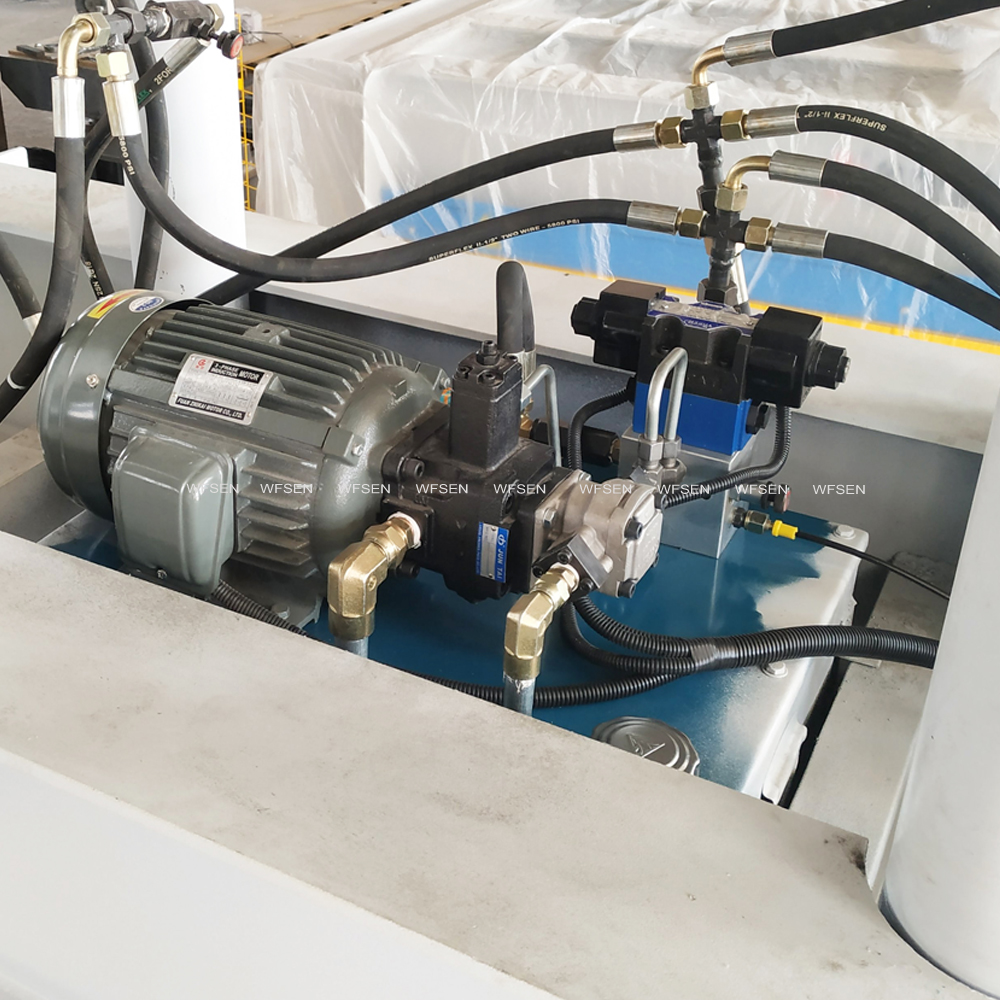
Two rows deserve attention. The hydraulic power unit is 4 kW, which is small next to the motor on any machine in the same shop, because a cold press does its work slowly and holds it. And the packing size, 3600 x 1500 x 2200 mm, is larger than the platen: the crate has to accommodate the feeding rollers and the frame, and it decides your container loading before anything else does.
Where a Cold Press Fits in the Line
Upstream is the glue spreader, and the spread rate it delivers is what the press cycle has to be built around. Downstream, the panel goes to a sander or a trimming saw.
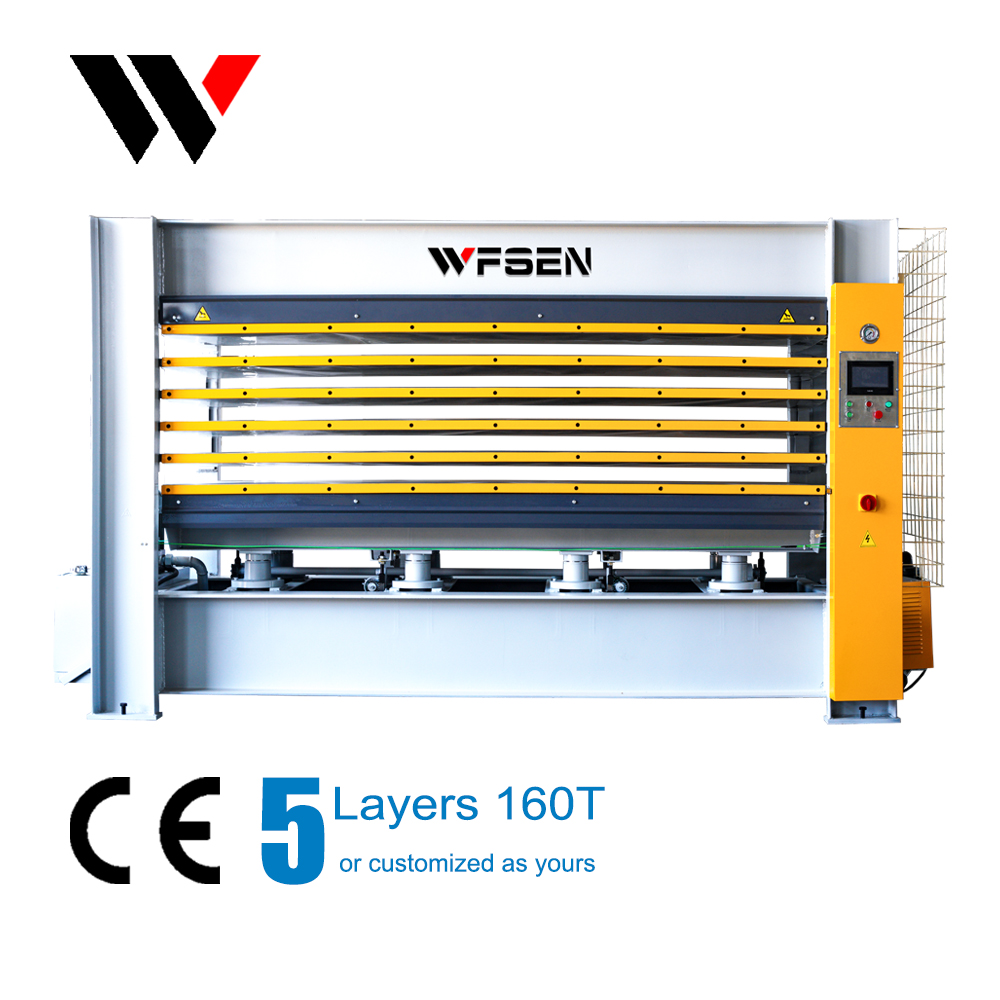
If the product needs heat, this is the wrong machine. A hot press sets adhesive in minutes rather than tens of minutes, and the 160T five layer press is the machine for that job. Cold pressing makes sense for doors, veneered panels and laminating where the adhesive is designed for ambient cure.
What to Check Before Ordering
Confirm the voltage you will actually supply; the machine is offered in 220, 380 and 415 V, and getting that wrong is a transformer or a rewind. Confirm the clear opening against the thickest lay-up you intend to press, including caul plates. Confirm the floor: 3500 kg over the footprint of a 3 m platen is a point load, not a distributed one.
Then press one stack you already know how to make. Compare it to what your current method produces, look at the glue line at the edges, and check the panel for bow across the full 3050 mm with a straight edge. Ten minutes with your own material tells you more than the specification does.