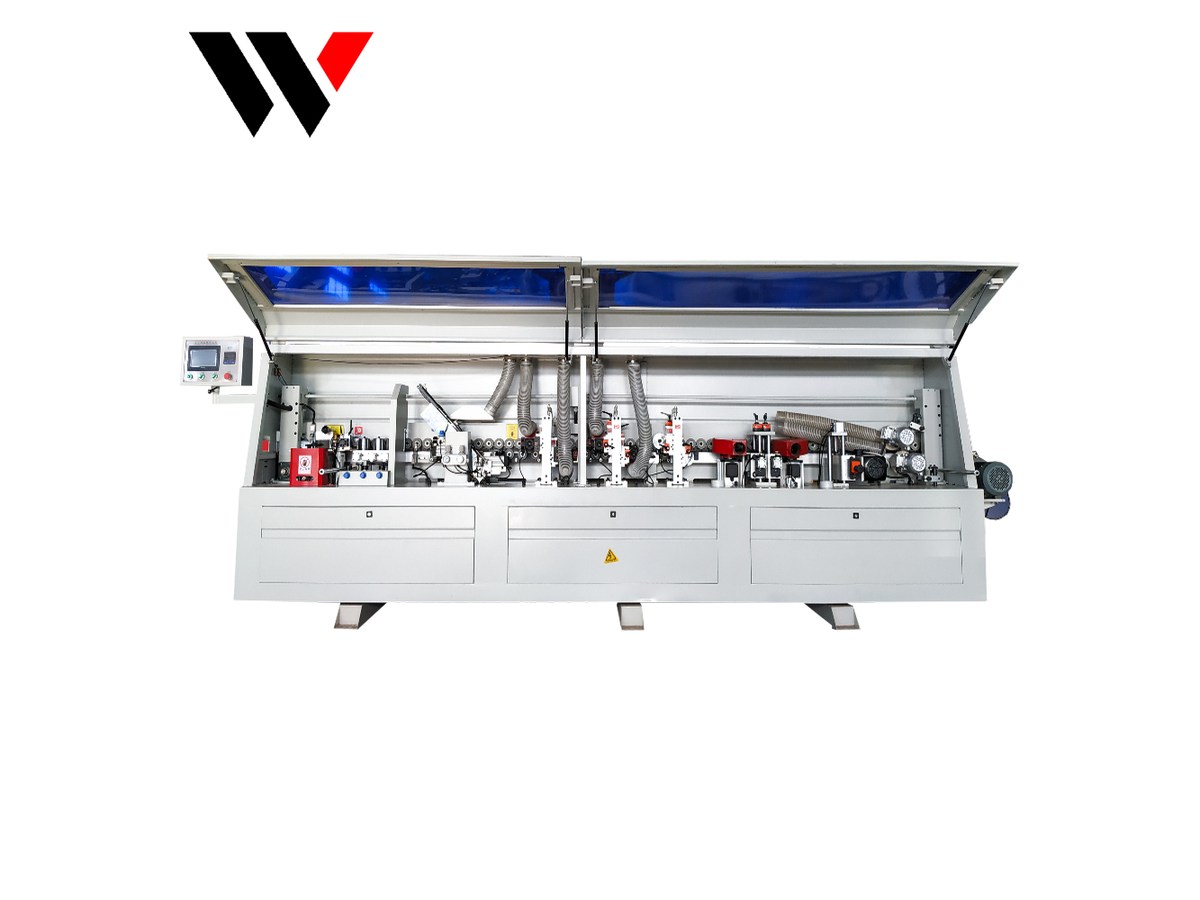
Short answer: edge banding is the process of gluing a strip of tape or solid edging onto the raw edge of a panel, then trimming that strip flush so the edge looks like solid material rather than exposed core. An edge banding machine does it in one pass through a line of stations — feed, glue, press, end trim, top and bottom trim, scrape and polish. The number of stations, and whether the trimming is motorised or done by hand, is what separates a 15 kg bench unit from a 2,200 kg production machine.
This page explains what the process does, what each station is for, and which published specification figures tell you how a given machine will behave. If you already know the process and want the model comparison, the figures for every machine in our range are collected in edge banding machine sizes and weights.
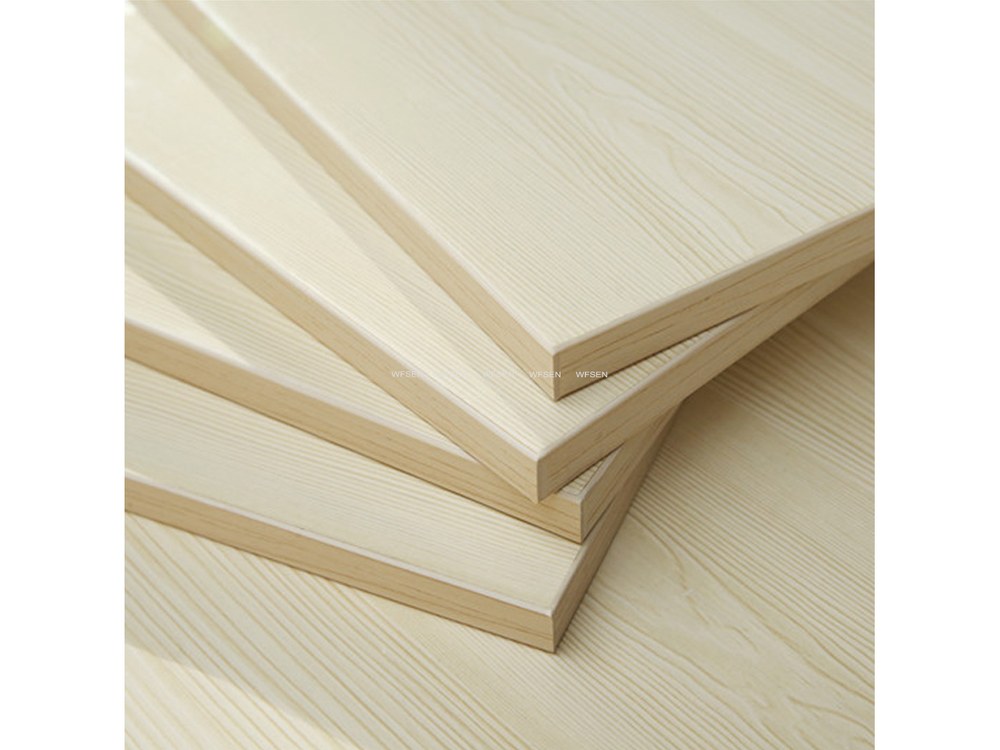
A cut panel has a raw edge: particle board shows its chip core, MDF shows a soft fibrous edge, and plywood shows its glue lines. That edge absorbs moisture faster than the face, it damages easily, and it is the first thing a customer sees on a shelf, a door or a table top. Edge banding covers it with a strip of PVC, ABS, melamine or solid wood, bonded with hot-melt adhesive, and then trimmed so the strip sits flush with the panel face on both sides.
The result is an edge that matches the face, resists handling, and closes the panel against moisture. On a kitchen carcass or a bathroom cabinet this is not cosmetic — an unsealed edge is where swelling starts.
A machine is a chain of stations mounted along one bed, and the panel passes each one in sequence. The order is fixed, because each station depends on what the one before it left behind:
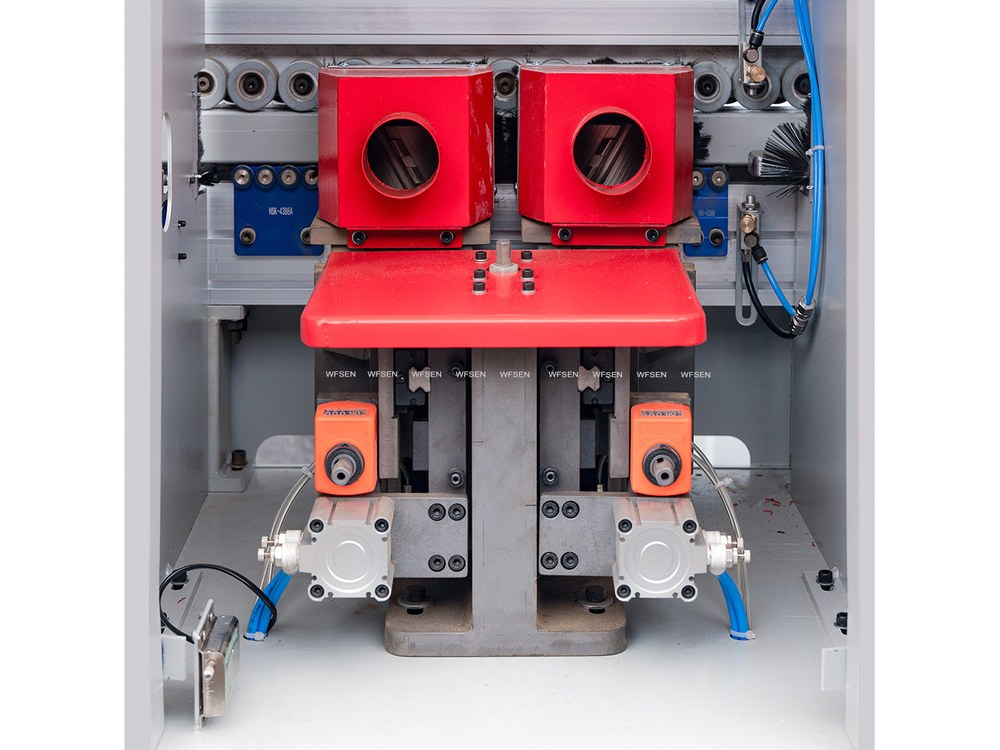
Read the station list on any quotation and you can see where the hand work starts. Our bench mini publishes a single 15 W motor and 800 W total: at that power the trimming stations are not there, and the operator finishes the edge with a hand trimmer. The MF202 publishes a 2 kW heater, two cutting and scraping motors at 0.8 kW and two polishing motors at 0.37 kW — every finishing step is a powered station. That difference, not the panel capacity, is what the buyer is paying for.
Three settings decide whether the tape sticks: glue temperature, feed speed and roller pressure. The temperature is the one that shows up in a specification table — the MF160B bench mini publishes a working temperature of 120–170 °C (listed on its specification page as "Work Temper 120-170"). Below the working range the adhesive does not reach its open state and the bond is weak from the first day; above it the adhesive degrades, and the edge that held at the factory fails in service.
Feed speed works against temperature. Run the panel faster and each point on the edge spends less time in contact with the glue and the rollers, so the machine has to be set hotter. For that reason a machine's published feed speed and its glue settings are not independent numbers — they are one setting expressed twice. Set the temperature and the feed speed together, or set neither.
Trimming is the operation that decides how the finished edge looks, and it is the clearest dividing line in the whole category. Hand trimming means an operator runs a trimmer along every edge of every panel; motorised trimming means two cutter heads and a scraper do it as the panel passes. On a batch of doors the labour difference is not marginal — it is the difference between an operator per panel and an operator per batch.
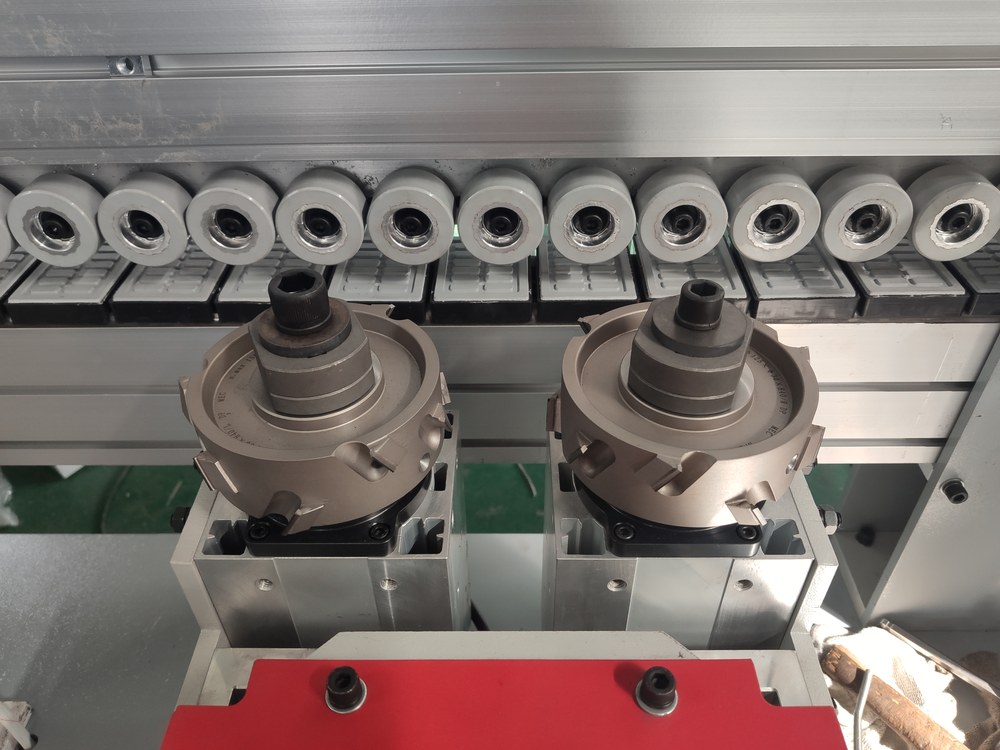
The trade-off goes beyond cost. Manual trimming reaches shaped work and single panels that a straight-line machine cannot feed, which is why the manual and curve models still publish the widest edge tape range in the range — see manual edge banding machines for the curved and folding-arm models.
Tape thickness is a machine constraint, not a free choice. Across the published specifications the range runs from 0.15 mm to 5 mm, and it splits by machine class in a way that surprises most buyers:
| Class | Models | Published edge tape range |
|---|---|---|
| Bench mini | MF160B | 0.3–3 mm |
| Portable | MF170B | 0.4–3 mm |
| Semi-automatic | MF60S | 0.3–3 mm |
| Manual and curve | MF260B, MF260T, MF260D | 0.15–5 mm |
| Folding-arm curve | MF260M | 0.5–2 mm |
| Full automatic | MF360D, MF360B, MF630A | 0.4–3 mm |
On the MF160B the tape width band is published as 10–40 mm, with an edge width of 10–45 mm. A hand-controlled feed can present thick solid edging that an automatic feeder will not accept, which is why the 180 kg manual models cover a wider tape band than the 2,200 kg automatic. If you edge 2 mm or 3 mm solid wood, the manual band is the one that covers it.
Radius is the other constraint. The manual, curve and folding-arm models publish a minimum working radius of 20 mm — below that the tape creases on the inside of the curve. Straight-line machines are not rated for radius work at all, because they cannot follow a curve.
Straight banding is the default: bookcases, carcasses, shelves, drawer boxes and doors all have straight edges, and a straight-line machine handles them. Three situations fall outside it:
Banding is a finishing step, and it comes after the panel has been cut to size and grooved or drilled, but before final assembly. In a panel furniture workflow the sequence is cut, groove or drill, band, then assemble and fit. Banding before drilling is possible and sometimes convenient, but drilling the raw panel and banding afterwards keeps the tape clean of chip-out around the holes.
Because it sits at the end of the line, banding is where a shortfall in the earlier steps becomes visible: an edge cut slightly out of square bands out of square, and a rough sawn edge shows through a thin tape. That is also why banding is the step most often chosen for the last capacity in a workshop, and why the number of panels per shift, not the panel thickness, decides which class of machine is needed.
Almost every band failure traces back to one of five machine settings rather than to the tape:
What is edge banding used for?
Covering the raw cut edge of a panel so it matches the face and is closed against moisture. It replaces the exposed core on particle board, MDF and plywood, and it is standard on every visible edge of cabinet, shelf and door panels.
How does an edge banding machine work?
The panel is fed past a fixed sequence of stations: glue is applied to the tape, pressure rollers bond it to the edge, end trimming cuts it flush at the ends, top and bottom trimming cuts it flush to the faces, and scraping and polishing finish the surface. Hand-fed models leave the trimming to the operator.
How thick can the edge tape be?
Across our published specifications, from 0.15 mm to 5 mm depending on the model. The manual and curve models cover the widest band at 0.15–5 mm; the full automatic machines publish 0.4–3 mm.
Can an edge banding machine do curved edges?
Only the manual, curve and folding-arm models. They publish a minimum working radius of 20 mm. A straight-line machine's feed system cannot follow a curve, whatever its tape range.
What power and air does the machine need?
800 W from an ordinary socket for the bench mini, up to 13.5 kW for the eight-station automatic. Compressed air is part of the installation on every model that publishes a pressure figure: 0.5 MPa for the manual and curve band, 0.6 MPa for the automatic band.
Which machine should I start with?
That depends on the panel, the tape and the volume rather than on the process. The decision route is set out in how to choose an edge banding machine.
The process is the same on every machine in the range; what changes is how much of it is motorised and how fast it runs. Tell us the panel you band, the tape you buy, whether any of your edges are curved, and how many panels you band in a shift, and we will tell you which class of machine the work actually needs.
The whole range is on our edge banding machine page, and you can send your specification directly to us here.